
19 White Lines of Danger: Vietnam Road Crossing
Welcome, to the grand spectacle of crossing the street in Vietnam—a task so fraught with peril and absurdity, it deserves its very own survival guide. Leave behind all notions from your home country regarding zebra crossings; in Vietnam, they’re essentially ornamental additions to the road.
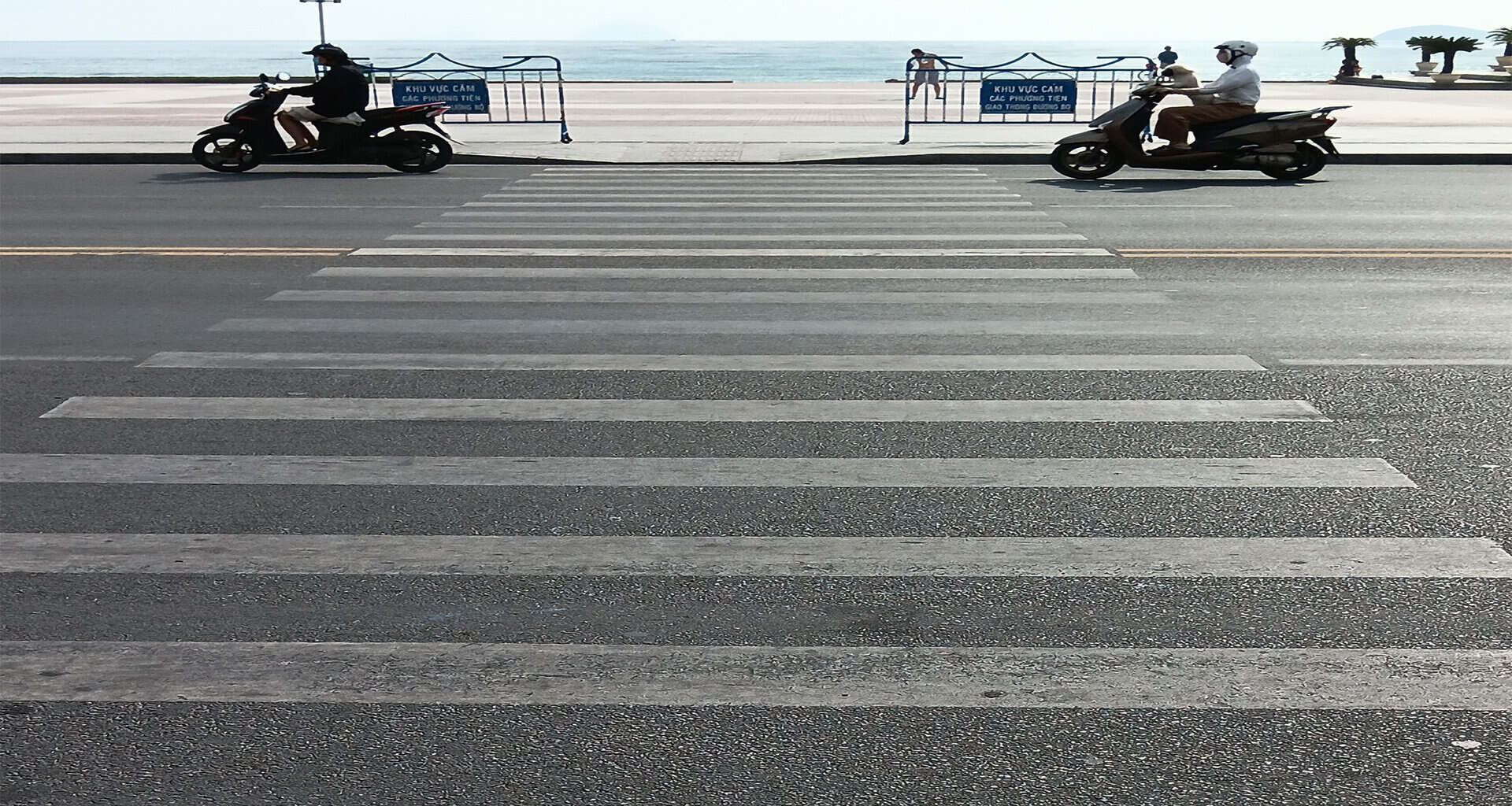
Picture this: you’re standing at the edge of a zebra crossing, staring down 19 white lines that stand between you and the other side. These aren’t just lines; they’re the gauntlet, the ultimate test of bravery, wits, and your unspoken will to live. This, my friends, is “19 White Lines of Danger.”

Chapter 1: The Standoff
It begins with a standoff. You vs. an ocean of motorbikes, cars, and bicycles, all swirling in a choreographed chaos reminiscent of a ballet, if the ballet was directed by a madman with a love for adrenaline. You think, “Surely, they’ll stop.” But oh, how naive! In Vietnam, zebra crossings are more of a suggestion, a decorative touch to the asphalt. The vehicles do not stop; they flow—like water around a particularly stubborn rock. And you, my dear reader, are that rock.
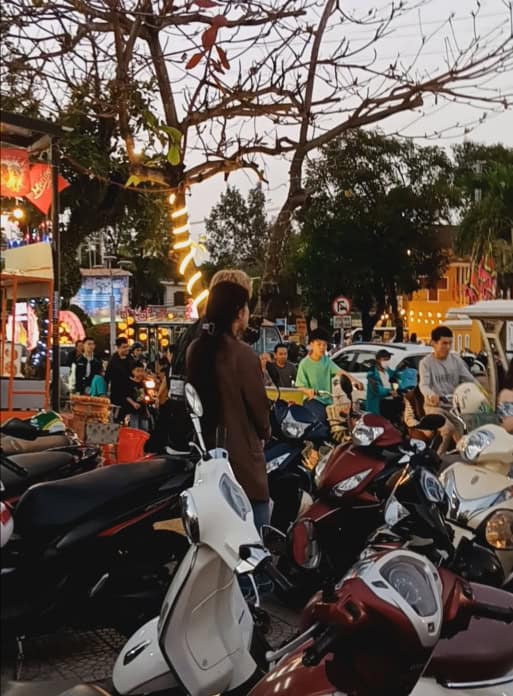
Chapter 2: Taking the Plunge
Armed with nothing but your wits and a naive sense of invincibility, you take the plunge. With each step, you affirm your existence to the oncoming traffic, a silent prayer to the gods of internal combustion engines that you may pass unscathed. Your strategy? Walk with purpose, confidence, and a pace steady enough to allow drivers the illusion they can predict your next move. It’s a tango on asphalt, where hesitation is your greatest foe, and decisiveness your shield.
Chapter 3: Dancing the Straight-Line Samba
Navigating directly across the urban torrent, you soon catch onto rhythm. There’s a method to this madness after all. The motorbikes swerve around you with surgical precision, their honks a form of sonar navigation. You realize you’re not just crossing a road; you are part of a grand, chaotic ballet. Each vehicle is a dancer, and you, somewhat bewilderingly, are the guest of honour. It’s exhilarating. It’s terrifying. It’s an insurance nightmare.
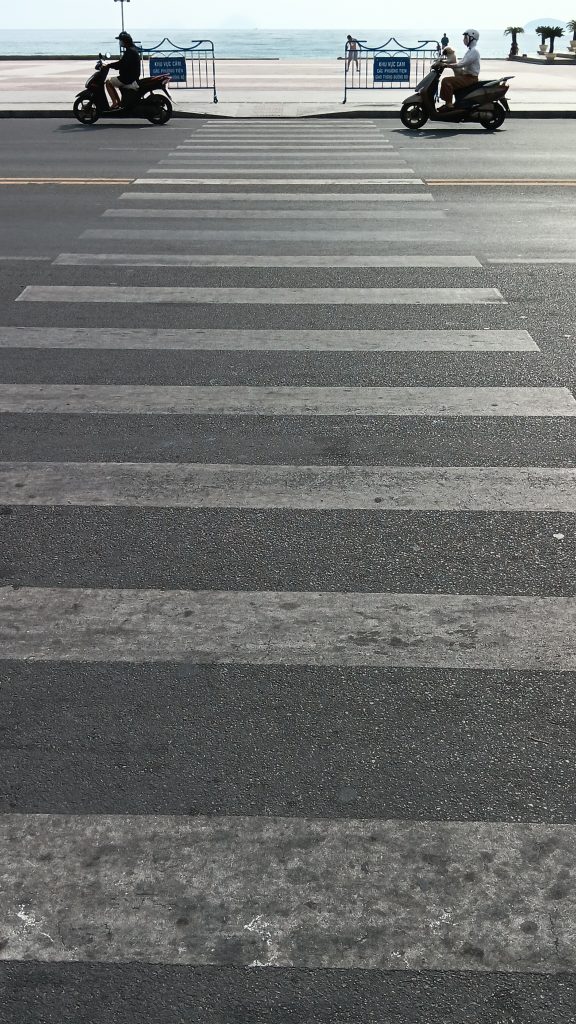
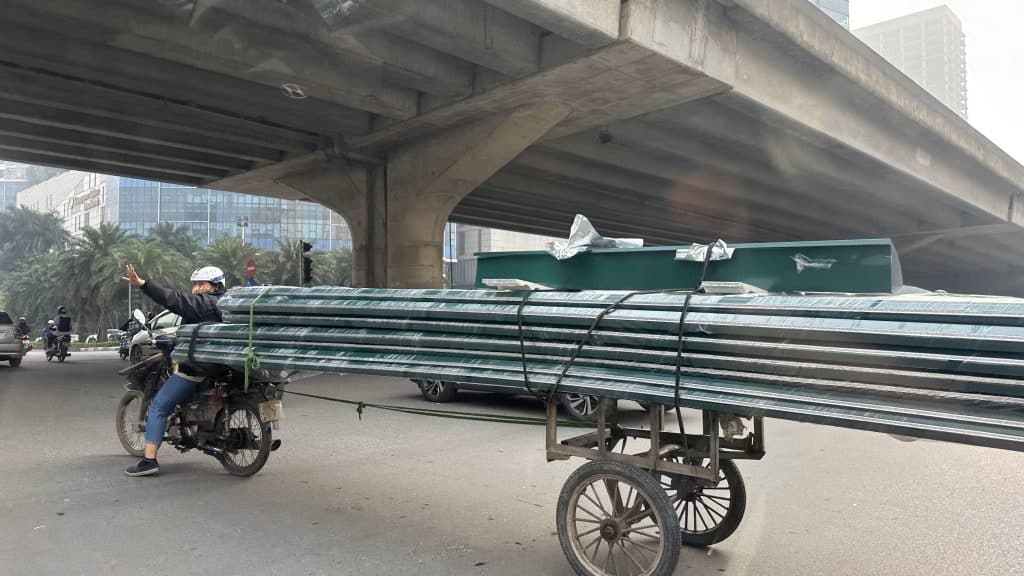
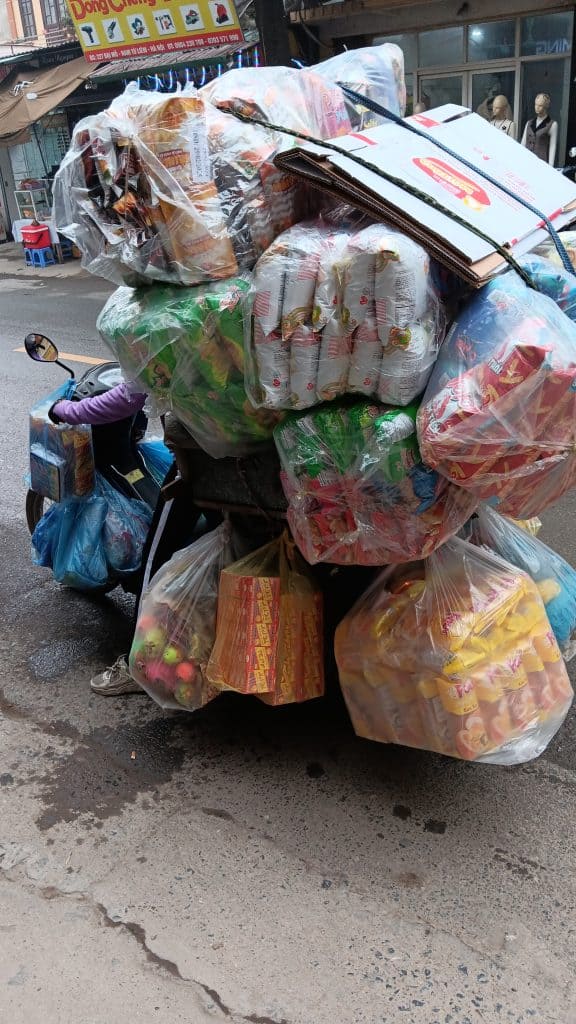
Halfway across, you’re now a veteran of the crossing, a seasoned pedestrian who’s seen things no crosswalk in your home country could prepare you for. A scooter loaded with what appears to be the entire inventory of a small appliance store narrowly misses you, its driver offering a smile and a nod as if to say, “Welcome to Vietnam, where physics is merely a suggestion.”
Chapter 5: The Final Stretch
As you near the end of your odyssey, the far sidewalk beckons like the shores of Ithaca. But beware, dear traveller, for this is no time for hesitation. The final steps are often the most perilous, as overconfidence can lead to folly. You tighten your resolve, adjust your pace, and prepare for the last leg of your journey.
Epilogue: The Survivor
You’ve done it. You’ve crossed the 19 white lines to danger and lived to tell the tale. As you step onto the safe embrace of the sidewalk, you can’t help but feel a rush of adrenaline, a sense of accomplishment. You’ve navigated one of the most chaotic pedestrian experiences in the world with grace, and perhaps a bit of blind luck.
But let this adventure be a lesson, a reminder of the delicate dance between life and limb that plays out on the streets of Vietnam every day. It’s a place where the zebra crossing is less a safe passage and more a stage for a thrilling, heart-pumping journey on foot.
So, to all who dare to walk the 19 white lines of danger, I salute you. You’re not just crossing a road; you’re embracing the very essence of slow travel adventure. Just remember, while the streets of Vietnam may teach you the art of the pedestrian dance, they also whisper a word of caution to the wise: “Survival is part skill, part art, and entirely necessary.”
And there you have it—a tale of bravery, foolishness, and the undying human spirit, all played out on the zebra crossings of Vietnam. Remember, when you face those 19 white lines, you’re not just crossing a street: you’re stepping into legend. Walk confidently, dear pedestrians, for yours is the kingdom of the crosswalk, if only for a moment. Love MyLifestyle.
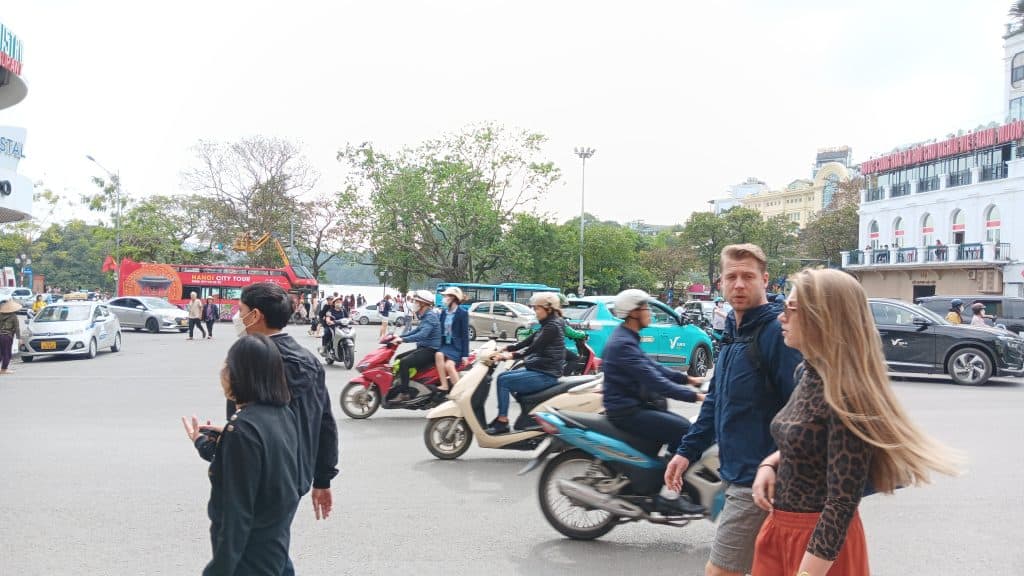
A Step-by-Step Guide For Crossing a Street in Vietnam
Crossing the street in Vietnam, particularly in bustling cities like Hanoi or Ho Chi Minh City, can seem daunting at first. However, with a bit of practice and these strategic steps, you can navigate the streets with more confidence. Here’s a step-by-step guide to help you master the art of crossing the road in Vietnam:
Step 1: Observe and Assess
- Before attempting to cross, take a moment to observe the flow of traffic. Notice how locals cross the road and the speed and direction of vehicles.
Step 2: Find the Best Spot
- Look for a zebra crossing if available, as it’s more familiar to drivers as a pedestrian crossing point. If none is available, choose a spot where you have a clear view of oncoming traffic and where drivers can easily see you.
Step 3: Position Yourself
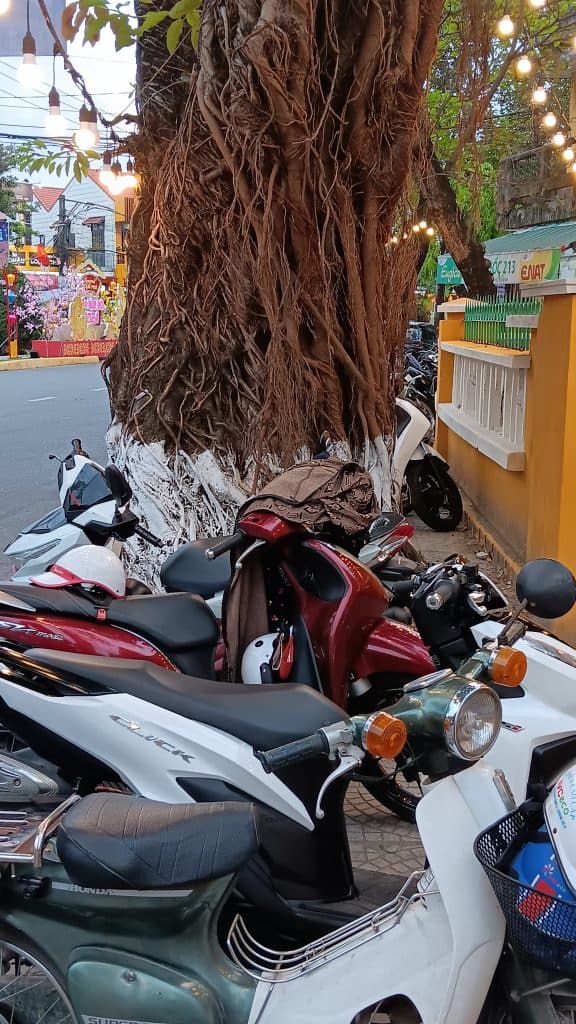
- Stand at the edge of the road, making sure you’re visible to oncoming traffic. Avoid standing behind obstacles such as parked cars or trees.
Step 4: Signal Your Intent
- Make eye contact with drivers when possible, to signal your intent to cross. Sometimes, a simple hand gesture asking them to slow down can be effective.
Step 5: Start Crossing with Confidence
- Begin walking slowly but confidently. Keep your pace steady and predictable so that drivers can anticipate your movements and navigate around you. DO NOT STOP!
Step 6: Keep Your Focus
- As you cross, keep looking both ways continuously. Stay alert to any changes in traffic flow or speed. Remember, vehicles may come from any direction.
Step 7: Adjust Your Pace if Necessary
- If you notice an oncoming vehicle that may not have enough time to slow down or navigate around you, be prepared to adjust your pace. However, try to keep sudden movements to a minimum.
Step 8: Reach the Other Side Safely
- Once you’ve reached the other side, take a moment to ensure you’re safely out of the way of any potential traffic on the sidewalk or roadside.
Additional Tips:
- Cross with Locals: If you’re unsure or nervous, wait to cross with a local or a group of people. Following their lead can provide additional safety and confidence.
- Be Visible: Wear bright clothing or reflective materials if you’re walking at night to ensure you’re seen by drivers.
- Stay Alert: Avoid distractions such as mobile phones or headphones while crossing. Your full attention is required.
- Learn from Experience: Each crossing can teach you something new about navigating Vietnam’s busy streets. Take note of what works and what doesn’t for future crossings.
Crossing the street in Vietnam can initially seem like a daring adventure, but with these steps and a bit of practice, you’ll find yourself moving through the traffic like a local. Remember, patience and awareness are your best tools for a safe crossing. Happy and safe travels on your pedestrian journey through Vietnam!