
Australia Day Abroad – Expat Life Vietnam
Calling two countries home
I know Australians aren’t exactly famous for chest‑beating patriotism. We don’t pledge allegiance at breakfast, we don’t drape ourselves in flags for fun, and we certainly don’t chant the national anthem at sporting events unless someone’s already had three beers and lost a bet.
In fact, if you compare us to places like the United States, our version of patriotism is subtle. Very subtle. Almost invisible. We love our country deeply; we just don’t feel the need to shout about it from the rooftops.
Then I moved to Vietnam.
Vietnamese patriotism is on a whole other level. The streets bloom with red and yellow flags whenever there’s a national holiday. National Day? Flags. Mid‑Autumn Festival? Flags. Someone sneezed in the general direction of a historic anniversary? Flags. They’re on buildings, street poles, shops, schools even tiny alleyways that look like they barely have room for oxygen, let alone national pride.
And it’s not performative. It’s heartfelt. It’s woven into everyday life. Living here has a funny way of reminding you where you come from and what you quietly carry with you.
Because despite our laid‑back reputation, there is one day Australians reliably emerge from their emotional caves and agree, collectively, to celebrate being Australian.
Australia Day.
The government hands out awards. Someone becomes Australian of the Year. Fireworks explode across capital cities. And somewhere, in backyards all over the country, a barbecue is fired up and a piece of lamb meets its destiny.
As tradition dictates.
Australia Day 2026 looked a little different for us.
We’d arrived back in Vietnam just days earlier, slightly confused about being back in this culture of fluid traffic Bun Bao and Bahn Mi when a friend and fellow Australian asked if we’d like to co‑host an Australia Day party.
Of course, we said yes.
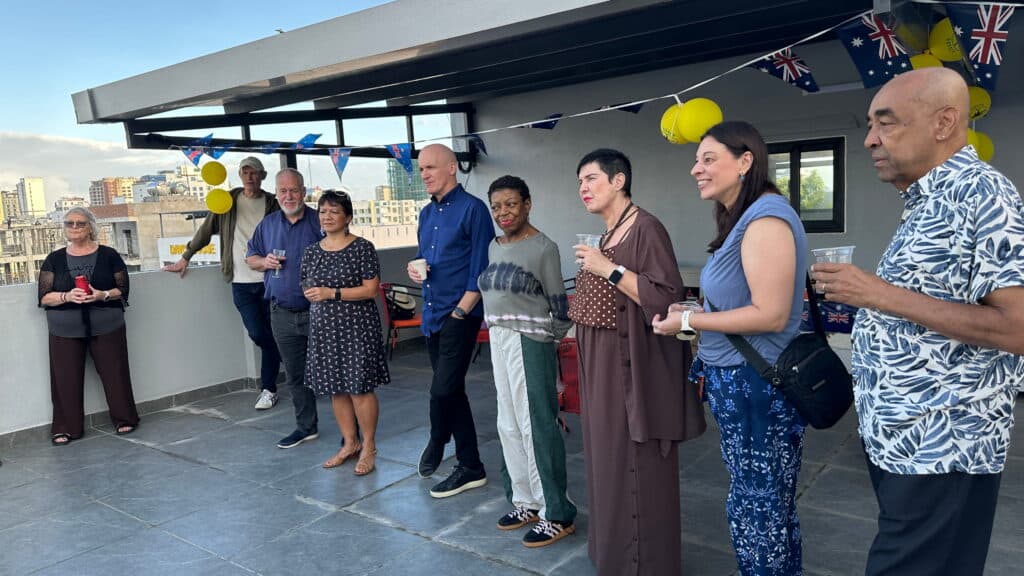
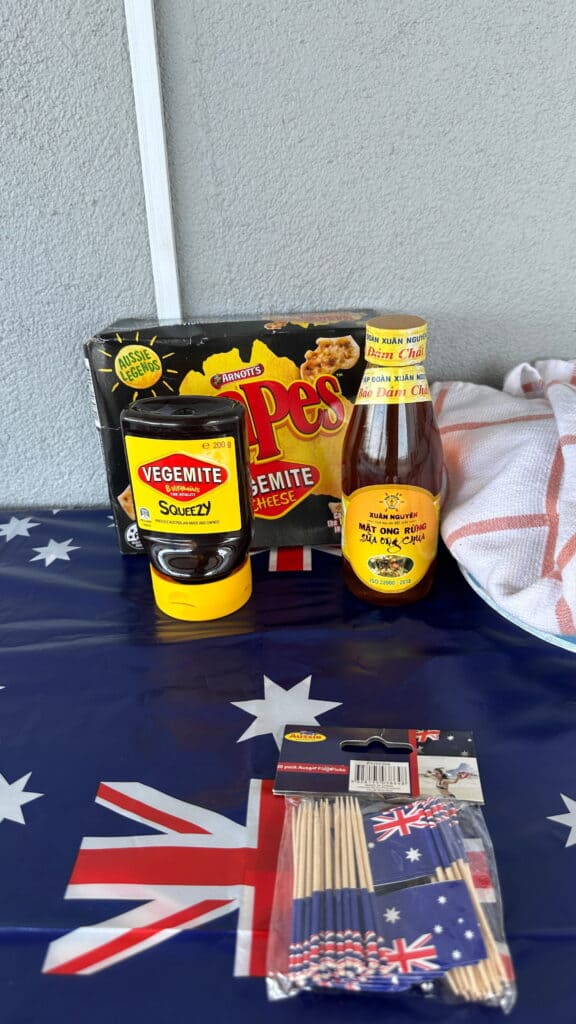
Fortunately, I’d packed Australian decorations in my suitcase (as one does), originally intended for my classes. So we had flags, Aussie bits and bobs, and just enough red, white and blue to confuse everyone about which country we were actually celebrating.
All we needed now were people.
A wonderfully random group of expats arrived at a rooftop overlooking Da Nang: Jamaica, the US, Panama, the UK and a handful of Australians to keep everyone honest. If Australia is multicultural at home, it’s even more so when exported.
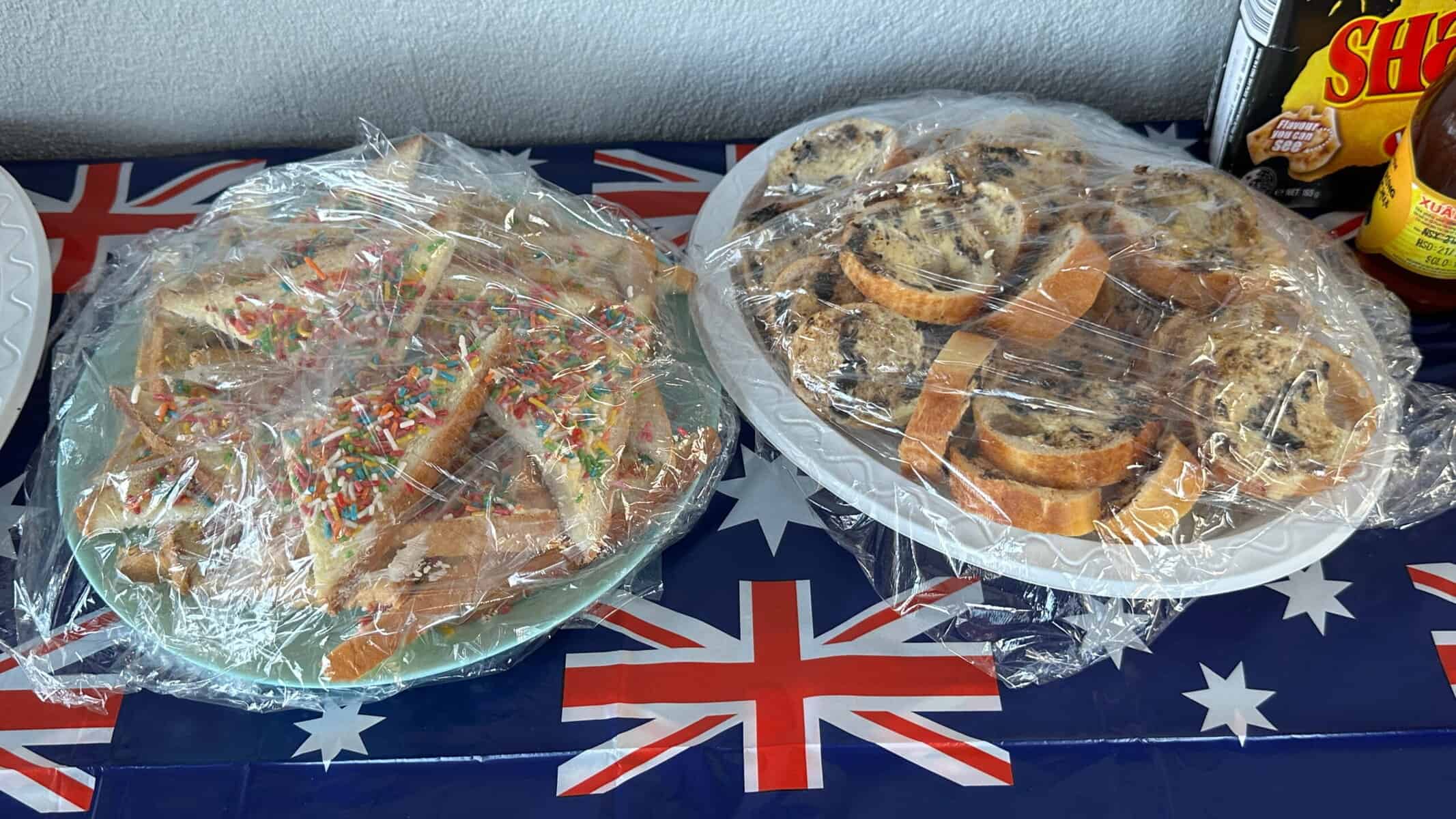
Food was the easy part. We ordered imported lamb through a local restaurant and served it Bahn Mi‑style, complete with thick gravy I’d smuggled over from Perth like contraband. Fairy bread made an appearance (to equal parts delight and concern). Vegemite sandwiches separated the brave from the foolish. And yes, I made damper.
Not over an open fire like the textbooks promise, but in my air fryer.
Add a few bottles of Australian wine and suddenly we were halfway to a national identity crisis.
But food alone wouldn’t do. These people needed to be entertained. And educated.
As teachers of international students, my husband and I have a deep well of Australian content just waiting for the right audience. We started with Australian slang, which never fails.
Phil from Arkansas absolutely lost it over “dry as a dead dingo’s donger”. There was genuine confusion over what a “thong” is in Australia (and some relief when clarification arrived). “No worries” sparked philosophical debate. “Yeah nah” caused a complete system malfunction.
We played Two‑Up using gold chocolate coins, since actual Australian currency was unavailable and possibly illegal. There were games of “guess the animal” and spirited discussions about just how many Australian creatures are actively trying to kill you at any given moment.
(Answer: most of them. Possibly including the magpie.)
By the end of the night, our guests were equal parts inspired, amused and mildly alarmed by the Great Southern Land.
And as the sun sank behind the Son Tra Peninsula, casting that soft Vietnamese glow over the rooftop, I felt something quietly powerful.
Here we were far from home sharing laughter, food, stories and a strange sense of belonging with people from all over the world. Vietnam has given us friendships we never expected, a life that constantly surprises us, and a second home that feels increasingly real.
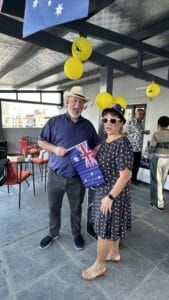
But there it was.
That tug.
You can live in another country. You can love it deeply. You can build a life there. But somewhere underneath it all, there’s a place that shaped you. For me, that place is Australia.
It doesn’t always shout. It doesn’t wave flags every day. But it shows up in moments like these in lamb and laughter, in slang and stories, in the quiet pride of knowing exactly who you are, no matter where you stand in the world.
And sometimes, it even shows up in an air‑fried damper on a rooftop in Vietnam.
Why Living Between Vietnam and Australia Changes You
Living between Vietnam and Australia gives you a quiet kind of clarity. When you step away from home, you start to see it properly the values, the habits, and the parts of yourself you didn’t realise were shaped by it.
Life in Vietnam highlights what Australians often take for granted: community, fairness, dry humour, and an easy-going way of not taking life too seriously. At the same time, Australia follows you everywhere in the food you miss, the language you slip into, and the instinct to bring people together around a shared table.
For travellers, expats, and anyone drawn to a slow travel lifestyle, this is the real gift of living abroad. You don’t lose who you are you refine it.
Vietnam teaches presence, adaptability, and gratitude. Australia grounds you in where you come from. And somewhere between fairy bread, Bánh Mì, and an air-fried damper, you realise you don’t have to choose just one place to call home.
If you’ve ever lived between countries, you’ll understand this instantly.
Home isn’t a place.
It’s a feeling you take with you. It’s who you are wherever you are