
Siem Reap Cambodia 12 Best Tips
I recently found myself with a rare free week between commitments and started looking for somewhere new to explore and take a break, ideally somewhere I could tick off the bucket list. One of the perks of living in Da Nang, Vietnam, is being just a couple of hours away (by air) from so many incredible destinations. Cambodia quickly stood out, but after a bit of research, I realised it was the kind of place that deserved more than a rushed visit. One week wouldn’t do it justice, and I knew I’d only end up frustrated, sweaty, and wishing I’d stayed longer. So, I made the wise (and very un-touristy) decision to pick just one place and do it well.
The next question was: North or South? It was May, which meant Cambodia would be cranking up the heat, so this needed consideration. But since I already live near the beach. “I wanted something with a bit more mystery and meaning, think ancient temples, sacred legends, and less sand in my shoes. Siem Reap it was.”
Some useful tips that will help you plan your visit to Siem Reap.
Siem Reap now has a new airport, which opened in October 2024. The old airport was closed due to concerns about potential damage to the nearby UNESCO-protected Angkor Wat temple. To help preserve the site, the new airport is located about a 50-minute drive outside of Siem Reap. Please allow at least one hour to travel to and from the airport. The cost is approximately $30 USD each way by private car. Cheaper options include shared rides, buses, or if you don’t mind a few bumps along the way a tuk-tuk will get you there too.
The old Siem Reap airport might be done with flights, but it’s not being left to gather dust. It’s already been flagged for redevelopment into some kind of tourist attraction. Ideas floating around include a museum or even an entertainment precinct. Nothing’s locked in yet, so watch this space, we’ll have to wait and see what it turns into.
Where to Stay in Siem Reap: Picking the Right Spot for You
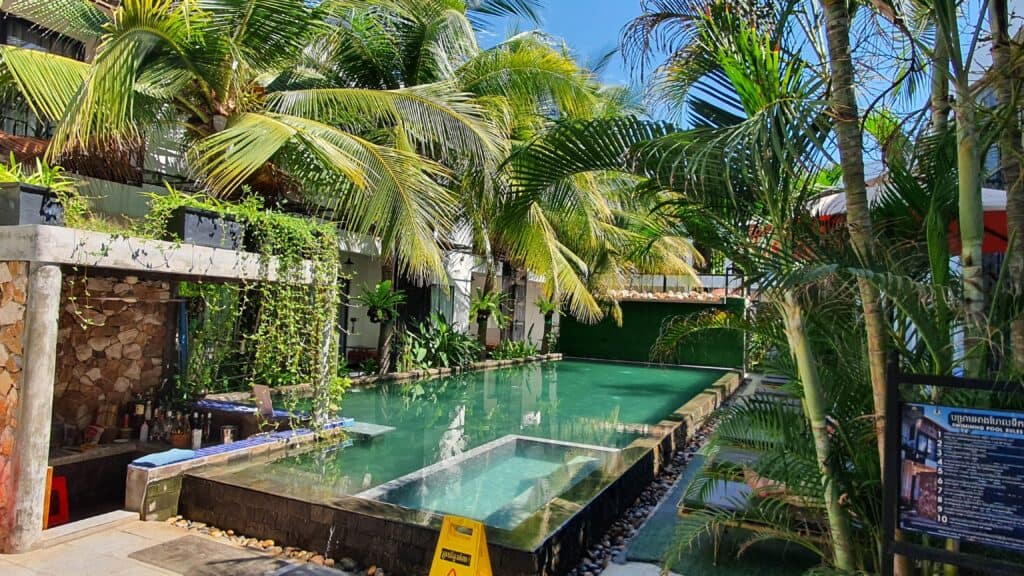
Siem Reap has a mix of areas to suit all types of travellers, from party lovers to peace seekers. Here’s a quick run-through to help you pick the right one for your trip. We chose the Wat Bo area and for our needs it was the perfect location. Not far from the attractions or Pub Street to eat, markets and museums.
I always use Booking .com for hotel bookings and found the Central Corner d Angkor Hotel had good reviews, location and facilities.
A Quick Guide to the Neighbourhoods
Old Market / Pub Street
This is where it all happens. Shops, bars, street food, tuk-tuks, there’s a buzz here all day and well into the night. Perfect if you want to be right in the thick of it and don’t mind a bit of noise with your noodle soup.
Wat Bo
Just across the river, Wat Bo is a little more relaxed and upmarket. You’ll find trendy cafes, boutique hotels, and a slightly more grown-up vibe. It’s ideal if you want to be close to the action but still get a good night’s sleep.
Sok San Road
Budget-friendly and super convenient, Sok San is a favourite for travellers who want to keep things simple and central. It’s walking distance to most places and has a good mix of guesthouses and smaller hotels.
Old French Quarter
If you like a bit of character, this is your spot. The colonial architecture, leafy streets, and slower pace make it a great area for wandering and soaking up the atmosphere.
Authentic Khmer Village-style Resorts
A little further out of town, these resorts offer bungalows, villas, and a more tranquil, local feel. You’ll trade location for peace and quiet, but for some, that’s the whole point.
Near Angkor Wat
If you’re planning early temple starts (and trust us, you should), it might be worth staying closer to the ruins. You’ll find some beautiful hotels nearby, like Anjali by Syphon, that make getting to the sunrise view a whole lot easier.
Getting around
Siem Reap is very easy to get around as it is only a small city. The most usual way is to use the traditional tuk-tuks officially called “remorque”, which is French for “trailer”. These are essentially two-wheeled trailers pulled behind a motorcycle, and they’re everywhere. Flag one down, agree on a price, and off you go.
In Siem Reap, you won’t be waiting long before a tuk-tuk rolls by. These motorised three-wheelers are the local go-to for quick and easy transport. Open-air with a bench seat in the back, they’re perfect for zipping around town or heading out to the temples. You’ll feel the breeze, hear the hum of the engine (that’s where the name tuk tuk comes from), and probably share a laugh with the friendly driver. It’s part of the experience and honestly, half the fun of getting around in Cambodia.
You’ll find plenty of transport options in Siem Reap: taxis, private cars, and even local buses. But if you skip the tuk-tuk, you’re missing out on the fun. Grab works well here too, and you can easily book a ride through the app, whether it’s a car or a tuk-tuk. Everything’s just a few taps away and super easy to get around.
Things to Do in Siem Reap
I did quite a bit of research before arriving in Siem Reap, and I’m so glad I did. Visiting in May probably wasn’t the best timing, as it’s the hottest month of the year. By 8am, it was already hitting 38°C. So, I knew I had to pace myself and avoid overloading the itinerary.
A few great Facebook groups like Cambodia Travel, Cambodia Expats, and Cambodia Travel & Tips were full of helpful suggestions. Using those tips, along with my Slow Travel Planner GPT, I was able to create the perfect itinerary to suit my pace and interests. (See itinerary section for details.)
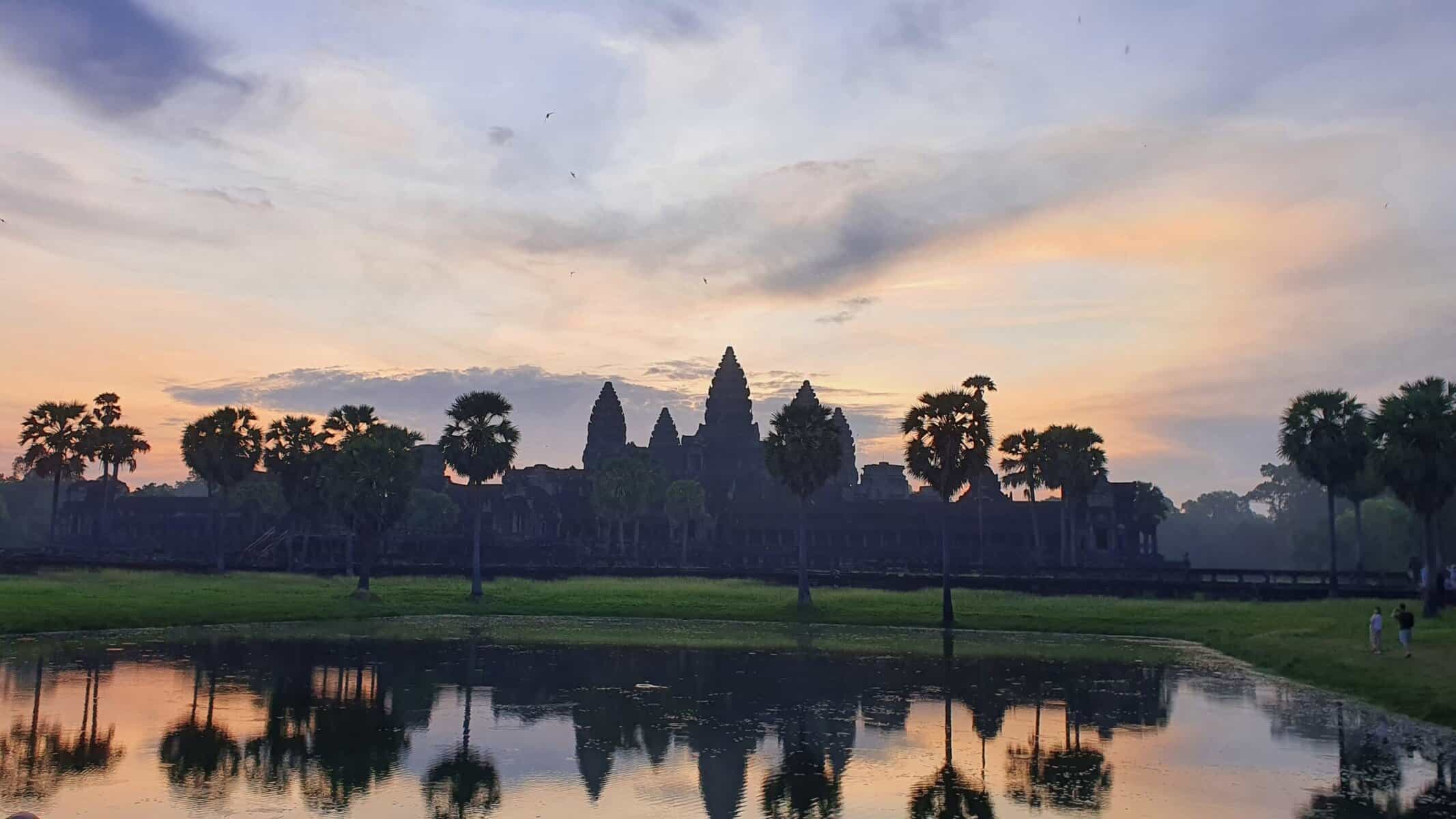
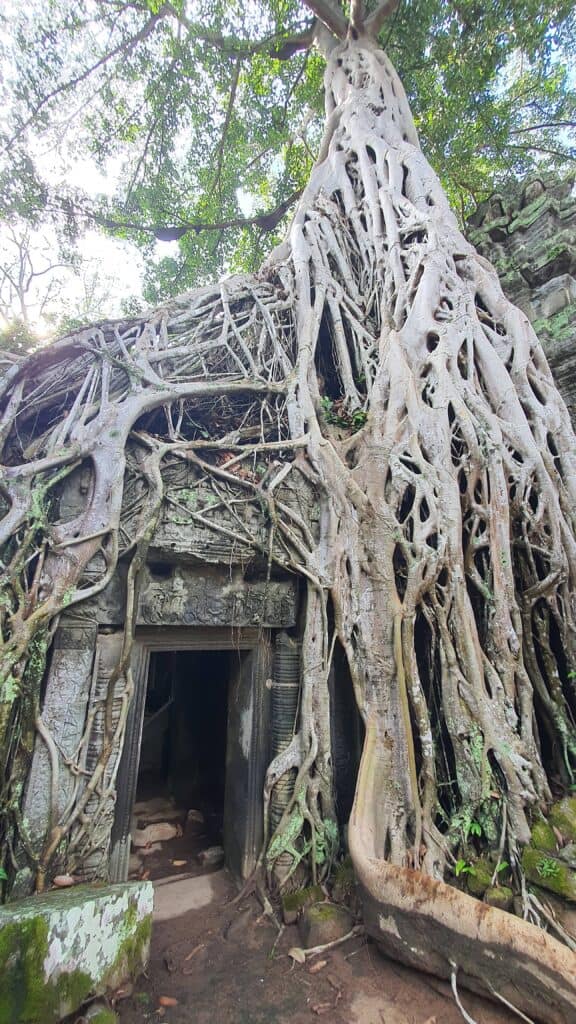
At the top of my bucket list, of course, was Angkor Wat. But here’s something worth knowing: Angkor Wat is just one temple within the massive Angkor Archaeological Park. The entire complex includes around 72 major temples and ruins, with plenty more smaller sites scattered across the park.
To explore the park, you’ll need to purchase an entry pass. A 1-Day Pass ($37 USD) gives you access to all the main temples for a full day, perfect if you’re short on time and want to tick off highlights like Angkor Wat, Bayon, and Ta Prohm. We went with the 3-Day Pass ($62 USD), which gives you access on any three days within a 10-day window. With the intense heat, this option lets us visit early in the morning or later in the afternoon when it is cooler.
Hot tip: Buy your tickets online a few days in advance. The onsite ticket counter gets very busy, and since they need to take your photo for the pass, it can take a while. Trust me, you don’t want to miss that iconic sunrise at Angkor Wat because you’re stuck in a queue.
After soaking in the beauty and wonder of the ancient temples, I felt drawn to explore the other side of Cambodia the part you don’t see on postcards. Beneath the smiles and stunning sights is a country still healing from a brutal past. I wanted to understand more, and that led me to a visit I’ll never forget.
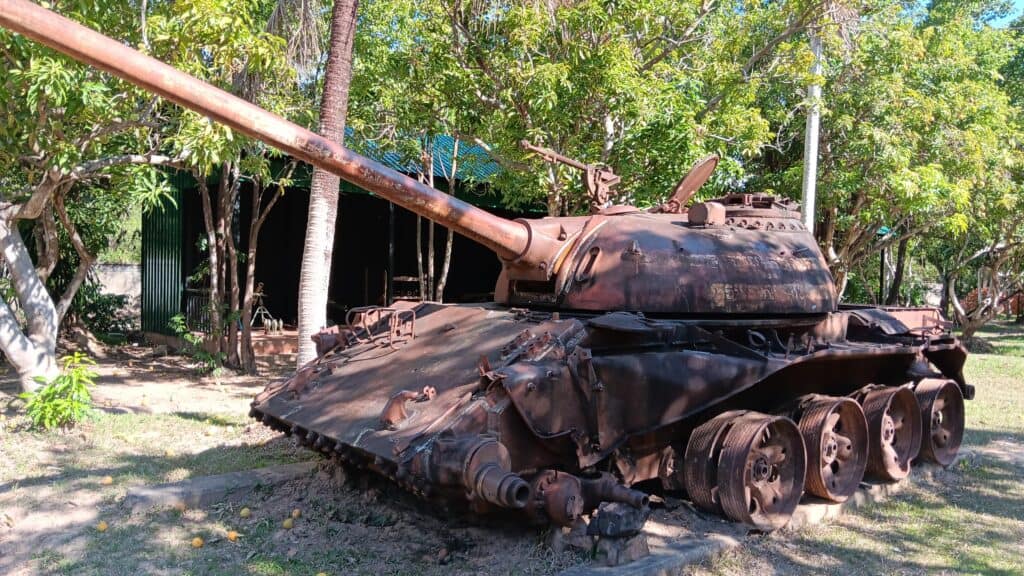
A Confronting Glimpse Into the Dark Past of Cambodia
With the temples explored, I felt it was important to understand more about Cambodia’s recent history, especially the horrors it endured during decades of war. Just outside Siem Reap is the War Museum Cambodia, and while it’s not polished or fancy, it’s one of the most powerful places I’ve visited.
The grounds are scattered with rusting tanks, helicopters, and weapons. At first, it looks like a forgotten military scrapyard. But once you start walking and listening, you realise these machines caused real pain and destruction. One room focuses entirely on landmines, thousands of which are still buried across the country, silently claiming lives and limbs to this day.
What really hits home are the personal stories. Some of the guides are war survivors themselves, including former child soldiers. Hearing how kids were taken from their families and forced to fight is absolutely heartbreaking. It’s not easy to take in, but it’s important.
This place doesn’t sugar-coat anything. It’s raw, confronting, and sad. But it gave me a much deeper appreciation for the strength of the Cambodian people and a strong wish that every one of those rusted-out war machines stays exactly like that: broken, abandoned, and never used again.
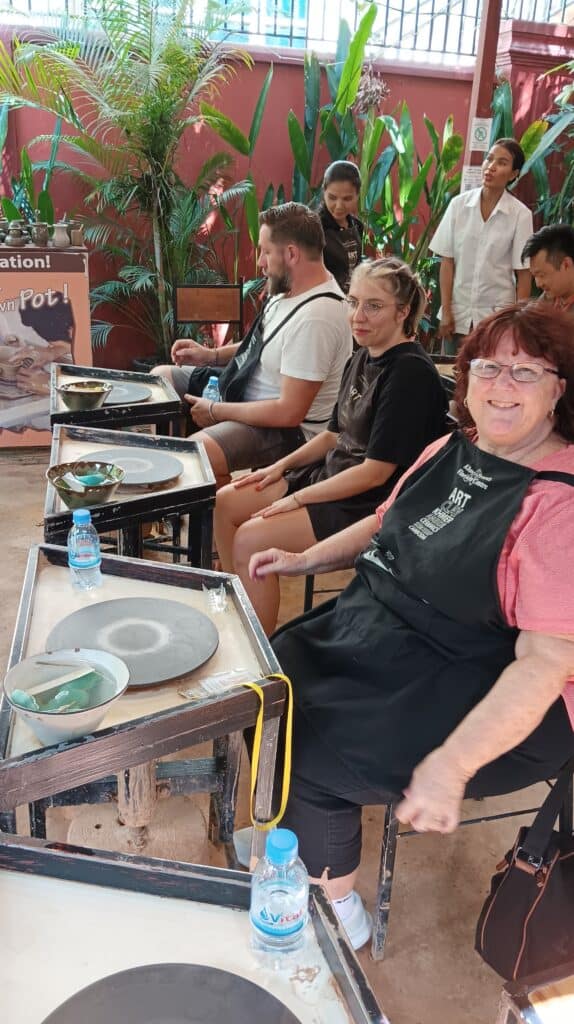
Then a Bit of Fun… Pottery Class!
I’m always on the lookout for something different, especially activities I haven’t tried before. I’ve taken cooking classes in several countries, had a go at jewellery making, basket weaving, even perfume blending, but never pottery.
So, when I came across the Khmer Ceramics & Fine Arts Centre, I was in. What really stood out to me was that this place isn’t just about clay, it’s about community. Since 2006, it’s been empowering local people, especially women and those with disabilities. In fact, more than half the staff are deaf or mute, and around 60% are women. It’s a woman-owned social enterprise doing incredible work, and I was more than happy to support it.
The class itself was a lot of fun hands-on, and surprisingly calming once you get the hang of the spinning wheel. The staff were friendly, patient, and very encouraging (especially when my “pot” started looking more like a squashed teacup). They showed us step-by-step how to throw a pot and helped us create a one-of-a-kind piece to take home. And yes, mine is definitely unique.
To top it off, we received a printed certificate, such a lovely touch and a great keepsake from a unique experience in Siem Reap.
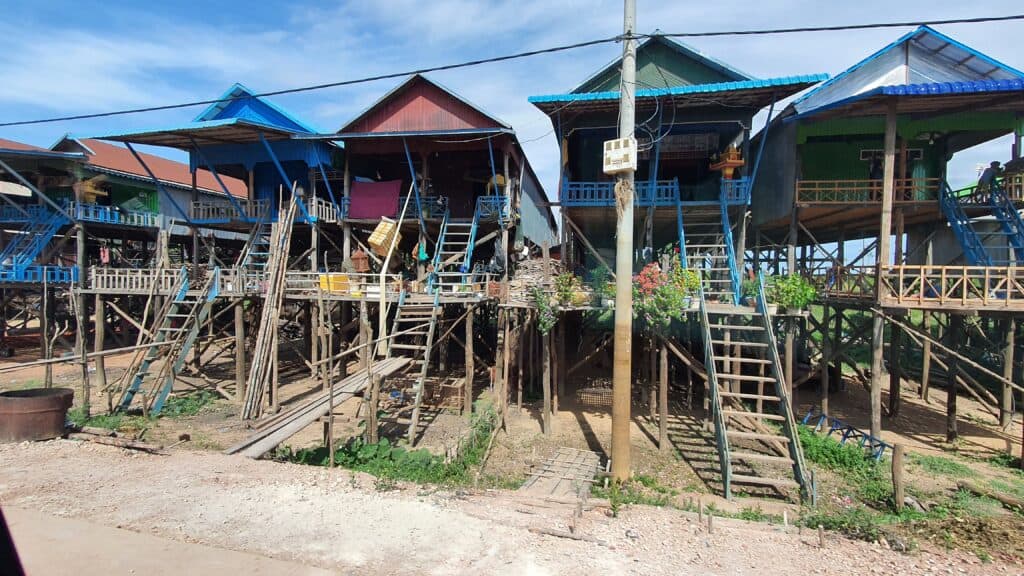
Tonlé Sap Lake and Kampong Phluk – A Floating Life
Just a short drive from Siem Reap lies Tonlé Sap Lake, Cambodia’s largest freshwater lake and a lifeline for many communities. During monsoon season (May to October), it swells to several times its dry-season size, transforming entire villages like Kampong Phluk into floating towns. Homes, schools, and shops sit perched on stilts, while boats glide along where roads once were. It’s all part of a UNESCO Biosphere Reserve, rich in biodiversity and essential to the country’s food supply.
We joined a half-day tour through Green Era Travel (booked on Viator), and while the scenery was unforgettable, the true highlight was visiting a local school. We brought along notebooks and pencils to donate, but what we received in return was far more meaningful. The kids were full of energy and curiosity, and chatting with them was easily one of the most uplifting parts of our trip. Their big smiles and big questions left a lasting impression, showing the strength and spirit of a community with so little, yet so much heart.
The tour also included a stop at a local market, raw, real, and fascinating. Here, you can buy everything from grubs and fried crickets to pigs’ heads. It’s a feast for the senses and definitely not for the squeamish, but it offers a true taste of daily Cambodian life and culture. If you’re up for a bit of adventure, it’s worth a wander.
Phare Circus Changes Lives
One of the most memorable evenings in Siem Reap was seeing a performance by Phare, The Cambodian Circus. This isn’t your typical big-top show it’s storytelling, culture, and raw talent rolled into one, with a powerful mission behind it.
Phare was born out of Cambodia’s post-war recovery. After surviving the trauma of conflict, a group of young men, guided by a dedicated art teacher, founded Phare Ponleu Selpak a school in Battambang that offers free education, art, music, theatre, and circus training to disadvantaged kids. Many of the performers you’ll see are graduates of this school, now using their skills to earn a living and share their stories with the world.
The show itself is electric. It blends traditional Cambodian tales with modern themes, using theatre, acrobatics, music, and dance. Some of the instruments are even handmade, and one scene uses thousands of grains of rice to create an unforgettable moment on stage. It’s emotional, energetic, and deeply moving, and every ticket helps support the performers and the school behind them.
Before the show, we grabbed dinner at the on-site food court. The dishes are cooked fresh to order, with local favourites like amok, fried noodles, and caramelised bananas. It was the perfect start to an inspiring night.
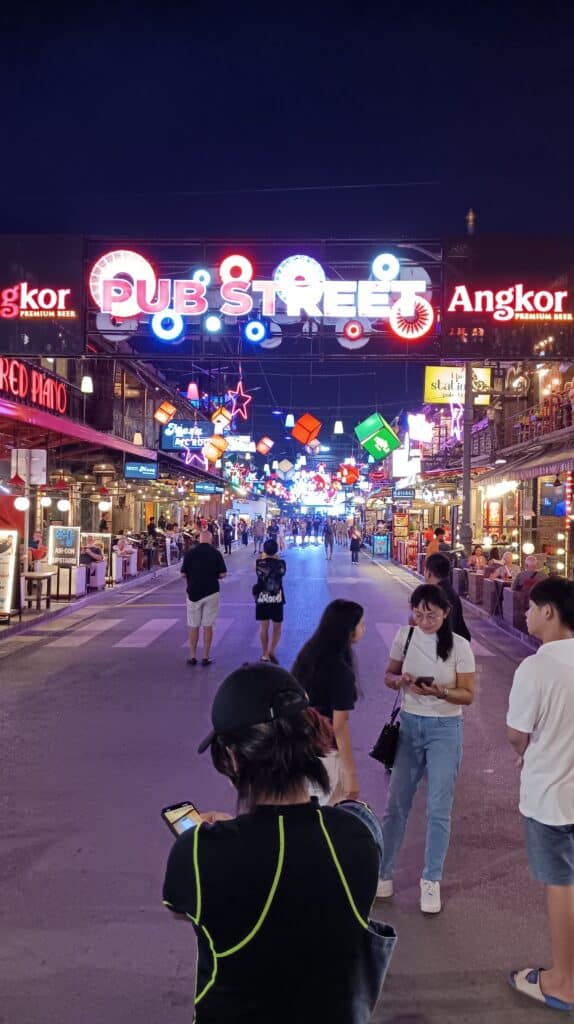
Exploring the Buzz of Pub Street and the Charm of Local Markets
No trip to Siem Reap would be complete without wandering through the vibrant chaos of Pub Street. This is the heart of the city’s nightlife full of energy, colour, and the constant buzz of music, chatter, and clinking glasses. Western-style bars and restaurants line the street, many offering jaw-dropping happy hour deals that seem to never end. Ice-cold beers for 75 cents and cocktails for a few dollars, including the iconic Tomb Raider cocktail made famous by Angelina Jolie while filming Lara Croft: Tomb Raider at the Ta Prohm temple nearby.
It’s a great place to people-watch, grab a cheap bite, or dance the night away if you’re up for it. Even if bars aren’t your thing, an early evening stroll through Pub Street is worth it just to soak in the atmosphere.
Made in Cambodia Market – Souvenirs with Soul
For a completely different pace, we wandered through the Made in Cambodia Market, and it quickly became one of our favourite stops. This small, ethical market celebrates everything local. Each item is either handcrafted by skilled Cambodian artisans or made in partnership with village makers, and it really shows.
The stalls were filled with beautifully made textiles, jewellery, candles, teas, coffee, and clothes, each piece telling its own story. The stallholders were so friendly, full of pride, and eager to share the background behind their work. We ended up buying all our holiday gifts here, plus a few treats for ourselves lemongrass lip balm and some fragrant Kampot pepper (an absolute gem for foodies!).
If you’re after souvenirs with heart and meaning not the usual factory-made stuff this market is a must-visit. It’s the perfect way to support local creatives and bring home something truly special from Cambodia.
Final Thoughts – Siem Reap, You Surprised Me
Siem Reap was so much more than I expected. I came for the temples and yes, Angkor Wat and the surrounding ruins were every bit as majestic as promised—but I left with a heart full of stories, connections, and unexpected highlights.
It was a full-on week. From sunrise starts at the temples to afternoon adventures on Tonlé Sap Lake, pottery classes, circus shows, and night markets we packed in a lot. Evenings brought a different kind of vibe. Pub Street was buzzing with energy, where cheap drinks flowed and music spilled out of every corner.
But what really stayed with me were the people, the school kids with big smiles and bigger questions, the market stallholders proud of their handmade crafts, and the artists and guides who turned every activity into something meaningful.
Siem Reap is a place of contrast. It’s beautiful and confronting, ancient and creative, joyful and reflective. Yes, the pace was fast. Yes, the heat was brutal. But I wouldn’t have changed a thing. We came curiously. We left with full hearts, tired feet, and a newfound love for this remarkable corner of Cambodia.
Love MyLifestyle #Sheridan-Leigh
Read my personal journal stories here.

How to Get There
Getting to Siem Reap is easier than ever, thanks to the new Siem Reap–Angkor International Airport (SAI), which opened in late 2023. Located about 40 km from Angkor Wat, this modern facility replaces the old airport to better accommodate international visitors and protect the ancient temples from aircraft vibrations. Siemreap.net+1AP News+1AP News
✈️ Flights
From Vietnam, Cambodia Angkor Air offers direct flights to Siem Reap from cities like Da Nang, Ho Chi Minh City, and Hanoi. Other regional carriers, such as Cambodia Airways, also provide connections from major hubs across Asia. cambodia-airways.com
🛂 Visas
Most travellers, including Australians, require a visa to enter Cambodia. The easiest way is to apply for an e-Visa online through the official Cambodian government portal: evisa.gov.kh. The process is straightforward, and you’ll receive your visa via email. Be cautious of third-party websites that may charge additional fees
🌐 Travel Resources
For comprehensive information on travel tips, cultural etiquette, and attractions, visit the official Ministry of Tourism website: tourismcambodia.org. It’s a valuable resource for planning your trip.tourismcambodia.org
🙏 Local Greetings
To make a good impression, learn a few basic Khmer phrases. A formal “hello” is Choum Reap Sour (ជំរាបសួរ), accompanied by the traditional sampeah gesture—palms pressed together at chest level with a slight bow. For informal situations, Susadei (សួស្តី) works well.
About the Author:
Sheridan-Leigh is the passionate voice behind the MyLifestyle Blog, where life is celebrated with vibrant stories and insightful travel tips. With a deep love for slow travel, she believes in truly experiencing each destination, creating connections beyond the surface. Her blog is a blend of personal stories, expert advice, and a philosophy that life is for living to the fullest and is rich with opportunities for growth and adventure. Join Sheridan-Leigh as she shares her journey, inspiring others to embrace life, travel deeply, and live fully.
Below are some recent travels on an interactive map.
Alternatively, view the full interactive travel journey at MyLifestyle Travel Map
Click on a trip line to see images, posts, accommodation and travel information about the destinations.
See her recent travels: Click on the image. https://mylifestyle.travelmap.net