

Is Bali Still a Cheap Holiday in 2026?
The extra costs that can make Bali more expensive than you expect
For decades, Bali has had a reputation as one of those wonderful holiday destinations where your money goes a long way.
Affordable accommodation, cheap meals, inexpensive massages and relatively low transport costs helped make Bali particularly popular with Australian travellers.
And much of that is still true.
You can still find a delicious meal at a local warung for very little money. You can still have a massage for a fraction of what you would pay in Australia. And there is accommodation available for almost every budget.
The Bali holiday many of us remember as incredibly cheap can now become surprisingly expensive, particularly once you add together all the costs that don’t necessarily appear when you first start looking at airfares and accommodation.
So, is Bali still a cheap holiday in 2026? The answer is yes but perhaps not quite in the way it used to be.
Bali Is Still Cheap If You Live Like a Local
One of the difficulties with answering the question Is Bali cheap? is that there really isn’t one Bali price.
Eat at a small local warung and you might pay around IDR 25,000–60,000 for a simple meal. Move into a tourist café and breakfast or lunch can easily cost IDR 70,000–220,000 depending on where you are and what you order. Dinner at a tourist-oriented restaurant can range from around IDR 150,000 per person to IDR 500,000 or considerably more. Coffee can be IDR 25,000 at one place and approaching IDR 70,000 at another.
The same enormous variation applies to accommodation. Simple guesthouses can still be found at very reasonable prices, while a stylish villa, beachfront hotel or luxury resort can cost hundreds of dollars a night. That is perhaps the biggest change in the way we should think about Bali.
Bali hasn’t necessarily stopped being affordable. Instead, it has developed an enormous tourism industry offering everything from genuinely inexpensive local experiences to international-standard luxury. Your Bali can therefore be remarkably cheap or surprisingly expensive. The difference often comes down to the choices you make.
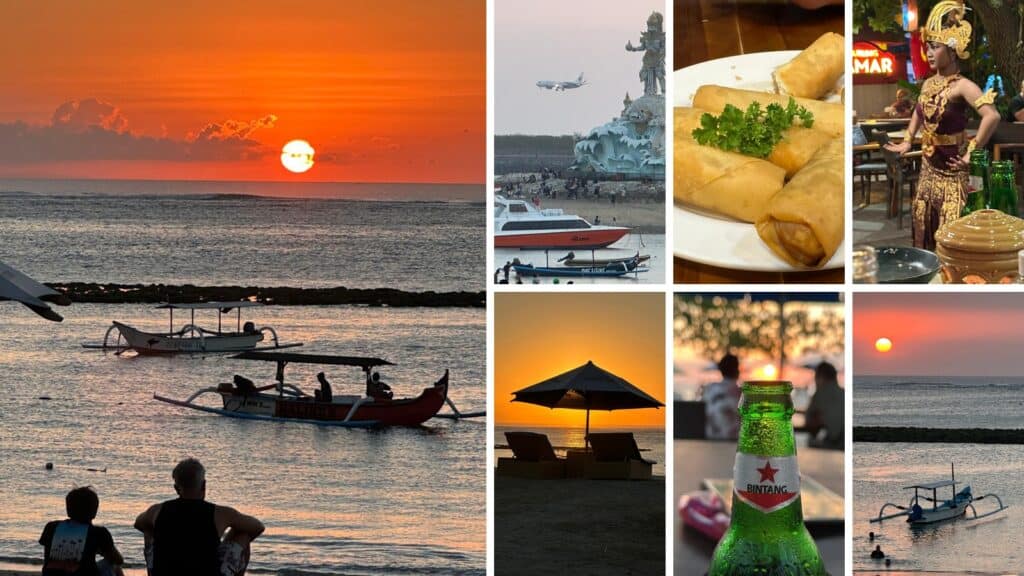
The Spending Starts Before You’ve Left the Airport
There are also some costs that didn’t exist on earlier Bali holidays.
Foreign tourists visiting Bali are currently required to pay the Bali Government’s foreign tourist levy of IDR 150,000 per person, subject to exemptions for certain visa and residency categories. The levy is separate from Indonesia’s immigration requirements.
For travellers eligible for Indonesia’s B1 Visa on Arrival or electronic Visa on Arrival, the current government fee is IDR 500,000 per person for a 30-day stay. That means an eligible couple using the Visa on Arrival system and required to pay the Bali levy could spend IDR 1.3 million between them before considering airport transport, accommodation, food or anything else.
Neither charge on its own is enormous. But they are good examples of why looking only at the price of your flight and hotel no longer gives you the complete cost of a Bali holiday.
Then you leave the airport
Airport taxis, hotel transfers and private drivers can cost considerably more, and app prices can change depending on demand, time of day and traffic.
Even a very short transfer can be surprisingly expensive. On our most recent visit, our trip from the airport to nearby Tuban cost IDR 200,000. For destinations further away, the price rises quickly.
A realistic airport transfer to Seminyak may be around IDR 150,000–300,000 depending on how you travel, while Canggu can commonly be around IDR 200,000–350,000 or more. Ubud will generally cost more again.
But perhaps the bigger issue in Bali in 2026 isn’t simply the price. It is the time. Canggu is only around 20 kilometres from the airport, yet Indonesia’s Ministry of Transportation says the journey by road currently takes around one to two hours.
During particularly bad traffic, travellers report journeys stretching beyond two hours. That is quite remarkable when you look at the distance on a map. The congestion has become significant enough that the Indonesian Government is working on a proposed water-taxi connection between the airport and Canggu, with the aim of reducing the journey to around 30 minutes.
For travellers, that means you need to think about distance differently in Bali. Eight or ten kilometres does not necessarily mean a short trip, and 20 kilometres certainly doesn’t guarantee you will be at your hotel within half an hour.
When choosing where to stay, the question shouldn’t simply be: How far is it from the airport? A much better question is How long could this journey actually take in Bali traffic?
And after a long flight, sitting in a car for another two hours may matter every bit as much as whether the transfer costs IDR 200,000 or IDR 300,000.
None of those figures should be treated as guaranteed fares. Bali traffic, demand and app pricing can quickly change them.
But the important point is that your holiday spending has already begun before you’ve unpacked your suitcase.
The Bali Everyone Sees on Instagram Isn’t Particularly Cheap
This is where Bali becomes interesting. The traditional Bali of warungs, family-run guesthouses and inexpensive local services still exist.
But alongside it is another Bali altogether. Private-pool villas. Designer cafés. Rooftop bars. Beach clubs. Fine dining. Boutique wellness retreats. International restaurants and beautifully styled venues designed as much for photographs as for food.
There is absolutely nothing wrong with enjoying any of those things. They are part of modern Bali. But they aren’t necessarily cheap.
A local meal might cost IDR 50,000 or 70,000, while dinner at a fashionable restaurant could easily cost ten times that amount and substantially more at the upper end.
The same applies to drinks. A cold local beer bought somewhere simple can still feel inexpensive. Start ordering cocktails at a beach club or premium hotel and suddenly Bali doesn’t feel quite so different from other international holiday destinations.
Accommodation follows exactly the same pattern.
Current 2026 guides put comfortable budget and three-star accommodation broadly around US$40–80 a night, while good four-star properties and private-pool villa accommodation can move into roughly the US$100–180 range. Luxury properties can easily exceed US$300 per night.
Bali gives you an extraordinary amount of choice. But increasingly, the version of Bali marketed most heavily to international visitors is not the cheapest version.
Getting Around Can Quietly Eat Your Budget
Bali’s traffic is more than an inconvenience. It can affect your holiday budget as well.
Short trips using Grab, Gojek or taxis can be inexpensive. If you mostly stay within one area, transport may remain a relatively small part of your spending. The problem begins when you start trying to see different parts of the island. A destination may look reasonably close on a map but take considerably longer to reach than expected.
Current estimates put shorter ride-hailing trips broadly around IDR 40,000–100,000, although longer journeys can easily move into the IDR 100,000–250,000 range.
Hiring a car and driver for a day is another popular option. Depending on the vehicle, hours, itinerary and inclusions, current estimates commonly begin around IDR 650,000–900,000 and rise from there.
Again, these aren’t outrageous amounts compared with hiring private transport in Australia. But several longer trips, airport transfers and days with a private driver can add a meaningful amount to the total cost of a holiday.
There is another cost too: time. Trying to fit too many areas into one Bali holiday can mean spending a surprisingly large proportion of it sitting in traffic. Sometimes staying put for a few days isn’t just more relaxing. It can also be cheaper.
The Little Charges Nobody Includes in the Headline Price
One of the easiest ways to underestimate the cost of Bali is to look at individual prices rather than the total holiday.
IDR 150,000 here doesn’t sound like much.
IDR 100,000 there doesn’t sound like much either.
But holidays are made up of hundreds of small transactions.
There are coffees, bottled water, Grab rides, tips, massages, entrance fees, snacks, laundry, drinks, airport transfers and all those little purchases that barely seem worth remembering individually.
Some restaurants and hotels may also display prices before applicable tax and service charges, so it is worth checking whether the amount on the menu or booking page is actually the final amount you will pay.
Restaurant food and beverages can also be subject to local tax, and service charges may be added separately depending on the establishment.
Then there are activities. Entry to temples, waterfalls and other attractions can range from relatively small amounts to IDR 150,000 or more, depending on the attraction and experience.
A massage might cost around IDR 170,000–300,000 somewhere relatively simple, while more upmarket spas can charge IDR 300,000–800,000 or considerably more.
None of these costs necessarily makes Bali expensive. But together they explain why your actual spending can look quite different from the holiday budget you imagined before leaving home.
What Does a Comfortable Bali Holiday Really Cost?
This is where Bali travel budgets become difficult. One website might tell you Bali costs US$60 a day. Another might suggest US$200. Both could be correct. It depends entirely on how you travel.
A backpacker staying in basic accommodation, eating at local warungs and using inexpensive transport is having a completely different holiday from a couple staying in a private villa, eating at tourist restaurants, enjoying cocktails and using private drivers.
For a comfortable holiday, rather than a backpacking trip or a luxury escape, a realistic budget needs to include:
- accommodation
- visa costs where applicable
- the Bali tourist levy
- airport transfers
- breakfast or coffee
- lunch
- dinner
- drinks
- local transport
- sightseeing and entrance fees
- massages or other holiday treats
- incidental spending.
Current Bali travel guides commonly place a mid-range traveller somewhere around US$100–200 per person per day once accommodation, food, transport and activities are included.
But even that range needs to be treated carefully. Two people sharing one hotel room do not simply spend twice as much as a solo traveller. Likewise, someone who loves local food may spend considerably less than somebody eating three meals a day in international restaurants.
The better approach is to decide what kind of Bali holiday you actually want and build your budget around that. If you want a comfortable hotel, nice restaurants, regular Grab rides, drinks, massages and a few sightseeing days, budget for that holiday rather than trying to force your spending into somebody else’s definition of cheap Bali.
So, Is Bali Still Cheap?
So, after all of that, is Bali still a cheap holiday in 2026? I think the answer depends on what you mean by cheap.
Bali can still offer remarkably good value, particularly compared with many other international holiday destinations. But the days of arriving with a small amount of spending money and assuming everything will be ridiculously inexpensive are disappearing.
There are simply more ways to spend money now, more charges before you even begin your holiday, and a much bigger tourism industry very good at helping you spend it.
That doesn’t make Bali poor value. It just means you need to budget for the Bali of today, not the Bali you remember from ten or twenty years ago.
And perhaps that is the most useful advice I can give anyone planning a trip here in 2026.
Don’t come to Bali because you think it will be cheap. Come because you want Bali.
Choose the parts of it that matter to you, decide what you’re happy to spend and budget realistically.
Because Bali may no longer be the bargain it once was.
But for millions of us who keep coming back, it can still be worth every rupiah.
Love MyLifestyle #Sheridan-Leigh
Read my personal journal stories here.
About the Author:
Sheridan-Leigh is the passionate voice behind the MyLifestyle Blog, where life is celebrated with vibrant stories and insightful travel tips. With a deep love for slow travel, she believes in truly experiencing each destination, creating connections beyond the surface. Her blog is a blend of personal stories, expert advice, and a philosophy that life is for living to the fullest and is rich with opportunities for growth and adventure. Join Sheridan-Leigh as she shares her journey, inspiring others to embrace life, travel deeply, and live fully.
Below are some recent travels on an interactive map.
Alternatively, view the full interactive travel journey at MyLifestyle Travel Map
Click on a trip line to see images, posts, accommodation and travel information about the destinations.