How Travel Changes As We Get Older (And Why That’s Not a Bad Thing)
Why the Perfect Holiday at 25 Is Often Very Different From the Perfect Holiday at 55
When I was younger, I thought travel was about collecting experiences. The more countries you visited, the better traveller you were. The more attractions you squeezed into a day, the more value you received.
If you returned home exhausted, sunburnt, sleep deprived and needing another holiday to recover, that simply meant you had done it properly. At least that was the theory.
Looking back now, I realise something interesting. The holidays I wanted at 25 are very different from the holidays I want today. Not because I have lost my sense of adventure. Not because I have become less curious about the world. But because travel, like life itself, changes. And nobody really warns you that it will.
The Travel Industry Often Sells One Version of Travel
Much of the travel industry still promotes the idea that more is always better. More destinations. More attractions. More activities. More movement. More photographs. More checklists.
Scroll through social media and it often feels as though everyone is racing from one famous landmark to the next. Entire holidays are reduced to a collection of proof-of-visit photographs.
Look, I was here. Look, I did this. Look how much I packed into a week.
There is nothing wrong with that. In fact, for many younger travellers, it can be incredibly exciting. But eventually something changes.
You begin to realise that the experiences you remember most are often not the ones that were scheduled. They are the unexpected conversations. The quiet mornings. The local café you stumbled across by accident. The moments when you stopped rushing long enough to actually notice where you were.
Comfort Is Not the Enemy of Adventure
One of the biggest travel myths is that comfort somehow reduces authenticity.
Many people almost wear discomfort as a badge of honour. The cheapest flights. The longest bus rides. The smallest hotel rooms. The most exhausting itineraries. As if suffering somehow makes the experience more legitimate.
Living in Vietnam long term comes with one small catch. Every 90 days, you need to leave the country and return again to satisfy the visa requirements.
There are several ways to do this, but the most famous is what expats affectionately call the “visa run.”
The day begins at the rather civilised hour of 6:00am when you climb aboard what is advertised as a luxury bus. The definition of luxury may vary depending on your age, flexibility and the condition of your lower back.
Five hours later, after one brief stop that somehow manages to combine a bathroom break, snack stop and survival challenge, you arrive at the Laos border. You are then instructed to leave the comfort of the bus and begin what feels remarkably like an endurance event. In the tropical heat, you walk from one checkpoint to another collecting stamps like an overenthusiastic passport collector.
First, you are stamped out of Vietnam. Then you walk further. Then you are stamped into Laos. At this point you may be imagining exotic cultural experiences, local exploration or perhaps a quick visit to a famous attraction.
No. You are directed towards a café where your primary activity is waiting. And waiting. And then waiting some more.
Somewhere in the background, mysterious visa-related processes are occurring. My personal theory is that nothing actually starts until everyone has purchased at least one coffee and a packet of chips.
Eventually your paperwork appears, everyone is rounded up, and the entire process is reversed. You walk back to Vietnam, collect another stamp, find your bus and begin the five-hour journey back to Da Nang. By the time you arrive home, you feel as though you’ve travelled internationally, completed a hiking expedition and aged slightly.
The alternative is flying to Bangkok. This sounds glamorous until you realise the process mostly involves airports, immigration counters, departure lounges and watching other people enjoy Thailand while you sit patiently waiting for your visa to be processed before flying straight back again. Neither option has become more appealing as I’ve grown older.
These days, we prefer a different approach. Instead of doing visa runs, we plan mini holidays every 90 days. If we have to leave Vietnam anyway, we may as well enjoy ourselves. A few days in Melaka. A relaxing break in Bali. A long weekend somewhere new in Southeast Asia. Next year we’re even planning a trip to Japan to see the cherry blossoms.
It’s funny how travel changes. Ten years ago, I would have happily endured a 10-hour bus trip to save a few dollars. Today, given the choice between a visa run and a few days exploring a beautiful destination, I’ll take the holiday every single time.
That may not be getting older. It may simply be getting smarter.
Yet as I have travelled more, I have come to appreciate something different.
Comfort is not the enemy of adventure. In many cases, comfort makes adventure possible. A comfortable bed means you wake up refreshed and ready to explore. A direct flight means you arrive with energy rather than frustration. A hotel in the right location means you spend less time commuting and more time enjoying the destination. Good coffee suddenly becomes important. Comfortable shoes become essential. A decent night’s sleep becomes one of the most valuable parts of the entire journey. None of this means you have become boring. It simply means you have become wiser about how you spend your energy.
The Shift From Fast Travel to Slow Travel
Perhaps the biggest change many travellers experience is the move from fast travel to slow travel.
At 25, spending three days in five different cities can feel exciting. At 55, spending five days in one city often feels far more rewarding. Instead of racing through destinations, you begin settling into them. You start noticing details. You learn the rhythm of a neighbourhood. You recognise familiar faces at the local café. You discover which bakery opens early and which restaurant is busiest with locals. The destination begins to feel less like a tourist attraction and more like a temporary home.
This is one of the reasons longer stays are becoming increasingly popular among mature travellers. People are no longer simply visiting places. They are experiencing them.
Travel Stops Being About Proving Something
When we are younger, travel can sometimes be influenced by what we think we should be doing. The famous attractions. The bucket-list destinations. The places everyone tells us we must visit. There is often an invisible pressure to follow the same path as everyone else. But over time, many travellers discover something liberating.
You do not have to travel the way anyone else does.You can skip the attraction everyone else is standing in line to see. You can spend an entire afternoon sitting beside a river.
I recently had a friend visiting from Australia and, after a week of sightseeing, markets, shopping centres and ticking off the usual tourist attractions, I felt we both needed something a little different.
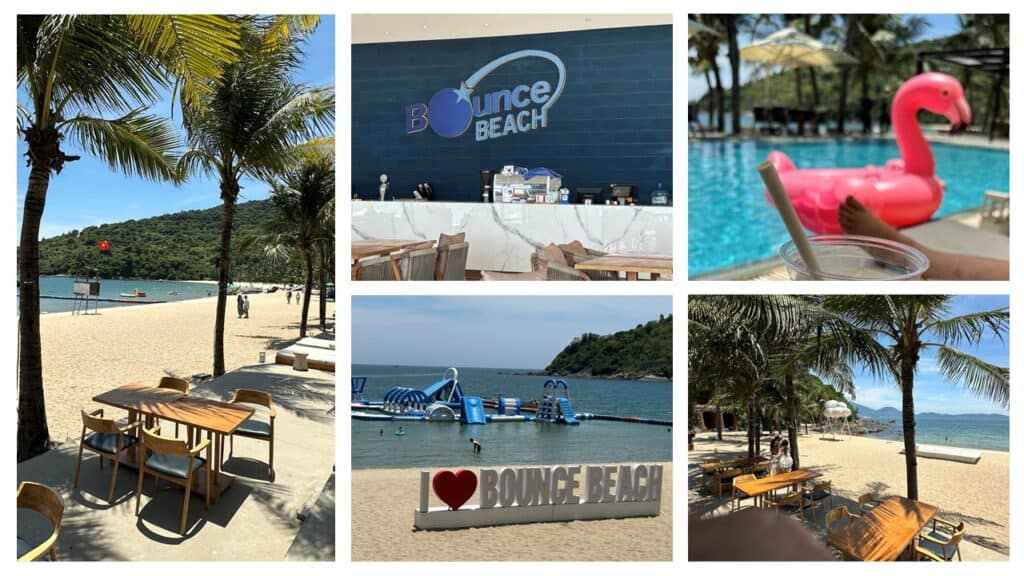
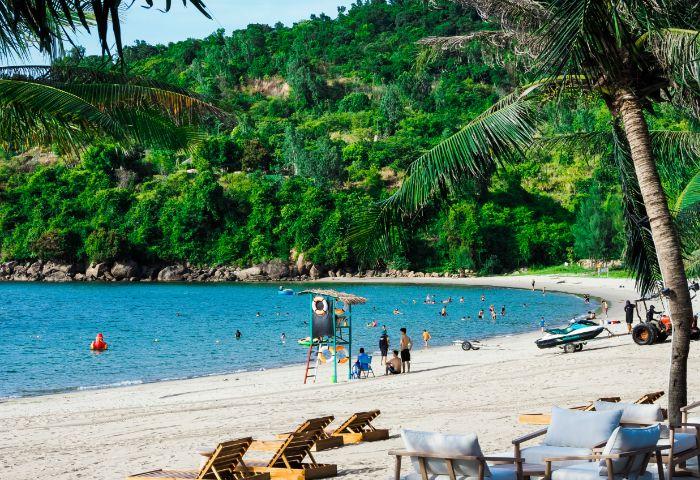
So instead of another busy day in the city, I took her to Bounce Beach, located just 10 kilometres south of Da Nang.
The concept is wonderfully simple. The entry fee is the purchase of a drink, and after that you are free to enjoy the facilities. You can relax on a deck chair beneath the palm trees, cool off in the swimming pool, or do what we chose to do and spend the day swimming in the calm waters of the bay.
There was something wonderfully refreshing about stepping away from crowded attractions and simply enjoying the basics. Warm salt water, blue skies, sunshine and the gentle sound of the waves. No schedule. No queues. No rushing from one place to the next.
A leisurely lunch served poolside completed the experience, and by the end of the afternoon we both agreed it had been one of the most enjoyable days of the entire week.
It was a reminder that sometimes the best travel experiences are not the famous attractions everyone talks about. Sometimes they are the simple, unhurried moments that allow you to slow down and appreciate exactly where you are.
The Real Luxury Is Energy
People often assume luxury travel is about expensive hotels, premium airline seats or five-star service. Those things can certainly be nice. But I have come to believe the greatest luxury is something much simpler. Energy.
Having enough energy at the end of the day to enjoy your surroundings. Having enough energy to be curious. Having enough energy to appreciate a beautiful sunset rather than collapsing into bed before dinner. And acknowledging when to have a stop day like at Bounce beach As we get older, energy becomes one of our most valuable travel resources.
Why Comfort Travel Is Growing
This shift helps explain why so many travel trends are changing. River cruising continues to grow. Longer stays are becoming more popular. Apartment living is replacing traditional hotel stays for many travellers. Small-group tours are attracting increasing interest. Wellness travel is booming.
People are not necessarily seeking luxury. They are seeking ease. They are seeking convenience. They are seeking travel experiences that fit the life they live today. The fastest itinerary is no longer always the most appealing. The most comfortable option often becomes the smartest one.
The Best Holidays Often Look Different Than We Expected
Looking back, some of my favourite travel memories have little to do with famous attractions. They are afternoons spent watching fishing boats return to shore, conversations with strangers over coffee, long lunches that turned into entire afternoons, and days where absolutely nothing on the itinerary went to plan. Ironically, many of the experiences I once would have considered a waste of valuable holiday time have become the moments I treasure most.
Final Thoughts
For many years I thought the goal of travel was to see as much as possible. Now I think the goal is to experience as much as possible. Those are very different things. One is measured in kilometres travelled. The other is measured in moments remembered.
The older I get, the more I find myself choosing experiences that leave me feeling rested, connected and present. Not because I have lost my sense of adventure. But because I have finally learned that the best journeys are not always the fastest ones. Sometimes they are the ones that allow us enough time to truly arrive.
If you’re planning a longer trip, retirement travel adventure, or simply want to experience a destination at a slower pace, Sheridan Leigh can help design personalised travel itineraries based on your interests, mobility requirements, travel style and budget. Sometimes the best journeys are not about seeing more. They are about experiencing more.
About the Author:
Sheridan-Leigh is the passionate voice behind the MyLifestyle Blog, where life is celebrated with vibrant stories and insightful travel tips. With a deep love for slow travel, she believes in truly experiencing each destination, creating connections beyond the surface. Her blog is a blend of personal stories, expert advice, and a philosophy that life is for living to the fullest and is rich with opportunities for growth and adventure. Join Sheridan-Leigh as she shares her journey, inspiring others to embrace life, travel deeply, and live fully.
Below are some recent travels on an interactive map.