


AI’s Impact on Travel Planning
Welcome to MyLifestyle.au—where travel isn’t just about getting from A to B, it’s about the experiences that shape us along the way. As someone who has travelled the world searching for deeper connections and richer experiences, I’ve always found that the best journeys come from embracing the unexpected. In this post, I’m excited to share how AI is transforming the way we plan our travels, bringing a little more ease and a lot more magic to the process. Let’s explore how technology can help you plan your next adventure, without losing the personal touch that makes every trip truly unforgettable.
The Changing Landscape of Travel Planning
Travel planning has always been a balancing act of excitement and frustration. From choosing a destination to booking flights and accommodations, the process can quickly evolve into an overwhelming task. It’s no wonder that travellers often dread the planning phase, seeing it as a necessary evil before they can enjoy their much-anticipated getaway. The traditional methods often mean spending countless hours sifting through information, comparing prices, and receiving advice from travel agents who may not always understand individual preferences.
But what if this journey within your journey didn’t have to be so complicated? Enter AI, on the scene like a digital knight in shining armour, ready to rescue the weary traveller. AI, with its potential for personalisation, efficiency, and innovation, is redefining the travel experience. It serves as a bridge from cumbersome traditional processes to seamless, intuitive planning. As we look deeper into how AI is transforming travel planning, we see a glimpse of a future where trips are tailored precisely to individual desires, without the hassle of navigating a labyrinth of options.

The Old Way of Travel Planning: An Uphill Battle
In the past, planning a trip felt akin to climbing a steep hill. You pick a destination, only to find yourself buried in a mountain of information. Researching flights, hotels, local experiences—each task was time-consuming and often led to a sense of confusion. According to a 2019 report, travellers spend an average of over 30 hours planning a single trip. That’s time better spent dreaming about sandy beaches or snowy mountains.
Navigating the world of travel often involves potential pitfalls. Booking a hotel might require reading countless reviews, comparing prices across multiple sites, and praying you’re choosing the right place to rest your head after a long day of exploring. This complexity often leads to a reliance on travel agents, of which only one in five travellers consistently consults.
Yet, not all travel agents are created equal. Many can provide valuable insights, but they might lack the agility expected from modern digital solutions. In my own experience, I once spent a full week coordinating a family vacation, only to end up with a different set of travel dates than everyone had agreed upon. A missed email here, a miscommunication there—the stakes felt high, but often the thrill of the journey would outweigh the stress of the planning.
Travelers often share similar anecdotes of frustration. One friend noted her agony over a “great deal” she found online, which ultimately turned out to be a mirage. After booking, she learned about hidden fees and surprise additional costs, leaving her with a bitter taste and a dented wallet. Traditional planning felt like falling down a well, with the depth and complexity making it easy to get stuck.

A New Era: AI Has Entered the Chat
But as the dust settles on those old practices, we find ourselves in a new era: AI has entered the chat. Though it may seem like a buzzword of the moment, AI in the travel sector is already transforming how travel is planned. With cutting-edge technologies like chatbots, recommendation algorithms, and automated booking systems, AI is not just a trend—it’s a necessity.
Imagine this: you’re planning a trip to Europe. Instead of overwhelming yourself with spreadsheets and endless comparisons, a virtual travel assistant takes your preferences and crafts a personalized itinerary. AI algorithms analyse your past travel experiences, log your preferences, and even suggest activities based on the current trends in travel and user feedback. The power of AI lies in its ability to cater directly to your tastes and preferences.
For instance, AI-driven travel platforms like Expedia or Skyscanner have seen a remarkable boom. In fact, studies suggest that the AI market in the travel industry is projected to grow from $2.8 billion in 2019 to $11.4 billion by 2026. These providers utilize machine learning to deliver personalised recommendations, whether it’s the best flights, the coziest accommodations, or exciting adventures awaiting you at your destination.
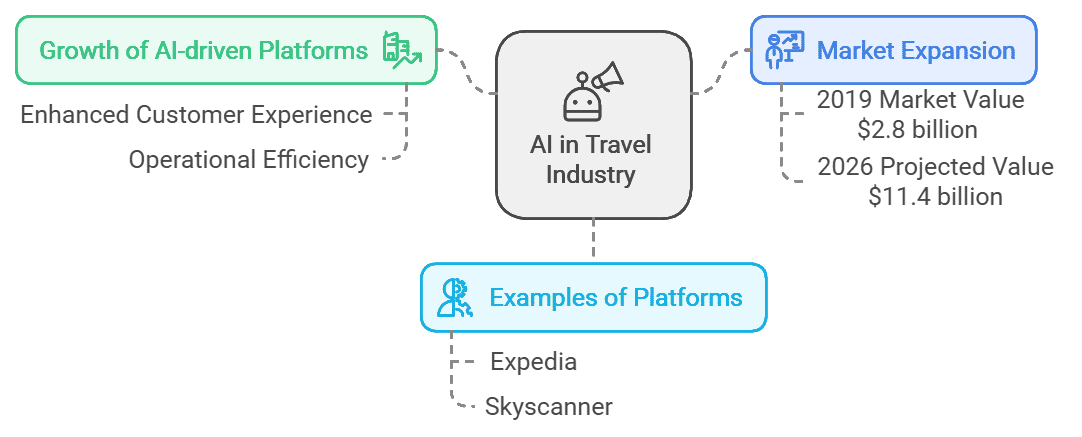
Perhaps the most exciting aspect of AI’s presence in travel is the ability to access real-time information. Gone are the days of anxiety over flight statuses and delays. With the help of AI-powered tools, travellers can receive updates and alerts instantly, meaning they can make informed decisions on the go. Travel becomes less about mere logistics and more about experience.
Of course, the case studies support this transformation. Companies like Kayak and Airbnb leverage AI technology to enhance user experiences, touch the white-hot pulse of trends, and meet the ever-evolving expectations of travellers. Unlike traditional methods, AI makes bookings effortless, often completed with just a few clicks. A recent traveler noted his experience with an AI booking tool: he simply typed in his destination and received an optimized itinerary along with booking confirmations, all completed in minutes.

The Trade-offs of Tech Over Tradition
AI undoubtedly brings significant benefits to the travel planning landscape, but it’s important to acknowledge the trade-offs. As we navigate the digital world, we sometimes sacrifice the human touch that enriches travel experiences. Personal interactions often lead to spontaneous discoveries—the hidden gems that aren’t listed in travel guides or flashy advertisements.
Nevertheless, efficiency and personalization are essential. Responding instantly to a traveller’s needs can often feel more productive than enduring long waits on hold with customer service. Statistics show that 53% of customers feel a lack of human interaction when using AI tools.
Things can go awry, though. Glitches in AI systems, hoarding personal data, or misreading user preferences can create challenges. The story of a friend who booked a “relaxing weekend getaway” only to end up in a bustling city during a major festival is cautionary. The AI-driven suggestion was so far removed from what she desired, she wanted to scream at her screen. The tight-knit relationship support provides may feel temporarily lost, replaced instead by algorithm-driven results that sometimes miss the mark.
Data privacy remains a weighty concern. As travellers seek tailored recommendations, they may hesitate if the processes feel invasive. Balancing convenience and trust is an ongoing dance engaging the travel sector. Where can travellers feel safe while being served by innovative AI?
Finding Balance: Seeking Your Own Path
Ultimately, it’s about balance. While AI tools usher in a new level of convenience, the allure of traditional planning remains strong for many. Some travellers relish the thought of poring over maps, exchanging stories with local agents, and crafting itineraries that triumph over algorithms. For many, that act of planning is not merely a chore but a cherished part of the travel experience, an adventure in itself.
Personal preferences vary widely here. Surveys indicate that nearly 48% of travellers still prefer human interaction in managing their travel, while about 40% are leaning towards AI. This suggests that while technology will continue to advance our capabilities, the human touch remains irreplaceable for a significant group.
There’s no right or wrong way to prepare for a journey. For some, the structure of an AI-assisted planning tool is a dream come true. For others, the emotional journey of planning their trip step-by-step is irreplaceable. Rather than arguing for either side, embracing the duality of AI and traditional methods might be the most rewarding strategy for aspiring explorers.
The Future of Travel: AI and Humanity Intertwined
As we look forward, what does the future hold for travel planning? With the rapid development of AI technology, we can expect a more integrated approach in which AI enhances the human experience rather than seeks to replace it. The trend points towards collaboration, with AI serving as a supportive tool that helps travellers while allowing their personal tastes to shine.
In a world increasingly driven by AI, travel agents will likely evolve, enhancing their roles in ways previously unexplored. They could become curators of individualized travel experiences, utilizing AI to tap into customer needs and preferences while crafting journeys that resonate on a personal level.
Imagine stepping into a virtual reality space, where an AI system helps you visualize your destination before you go—sipping cocktails on a beach in the Caribbean or engaging in local fare at a farm-to-table restaurant. Travel becomes a hybrid of technology and humanity, where enjoyment and practicalities can coexist.
Embrace Both: The New Travel Paradigm
The journey of travel planning may be evolving, but the essence of travel remains the same: discovery, connection, and joy. Embracing both AI and traditional methods allows each traveler to find their unique path. By recognizing the strengths and weaknesses of both platforms, individuals can forge their preferred path, sculpting travel experiences that resonate deeply.
As technologies continue to develop, keeping an open mind remains crucial. The landscape of travel planning will undoubtedly morph, but at its core, the experience will always symbolize a quest—a quest that finds meaning both in the tools that help us along the way and the personal adventures we embark upon.
FAQ Section
- How is AI improving the travel planning process?
AI streamlines the planning process by offering personalized recommendations, automating bookings, and providing real-time information to enhance customer experiences.
- What are the potential downsides to using AI for travel planning?
The main concerns include the loss of personal connections, the risk of data privacy breaches, and potential inaccuracies in recommendations if the AI misinterprets user preferences.
- Can traditional travel agencies compete with AI solutions?
While AI provides efficiency, traditional travel agencies can thrive by offering personalized service and responding to specific traveller needs that AI might overlook.
- How does AI ensure personalized travel recommendations?
AI algorithms analyse user data, preferences, and past travel behaviour to provide tailored suggestions for destinations, itineraries, and accommodations.
- What should travellers be aware of regarding data privacy?
Travellers should be mindful of the type of data shared with AI platforms, ensuring they are comfortable with privacy settings and aware of how their data is used for recommendations.
The blend of tradition and modernity has great potential to create memorable travel experiences. Embracing both methods will allow us to enjoy the best that travel planning has to offer as we move forward.
At the heart of every journey is the desire to connect—whether with people, cultures, or even us. While AI can certainly streamline the planning process, it’s still those serendipitous moments and heartfelt experiences that make travel so rewarding. Here at MyLifestyle.au, I believe in blending the efficiency of technology with the wisdom of lived experiences. So, as you set off on your next adventure, remember that it’s not just about the destination—it’s about how you choose to get there and the stories you’ll create along the way. Safe travels, and may your next journey be filled with discovery and joy!
Love MyLifestyle #Sheridan-Leigh
Read my personal journal stories here.
About the Author: