

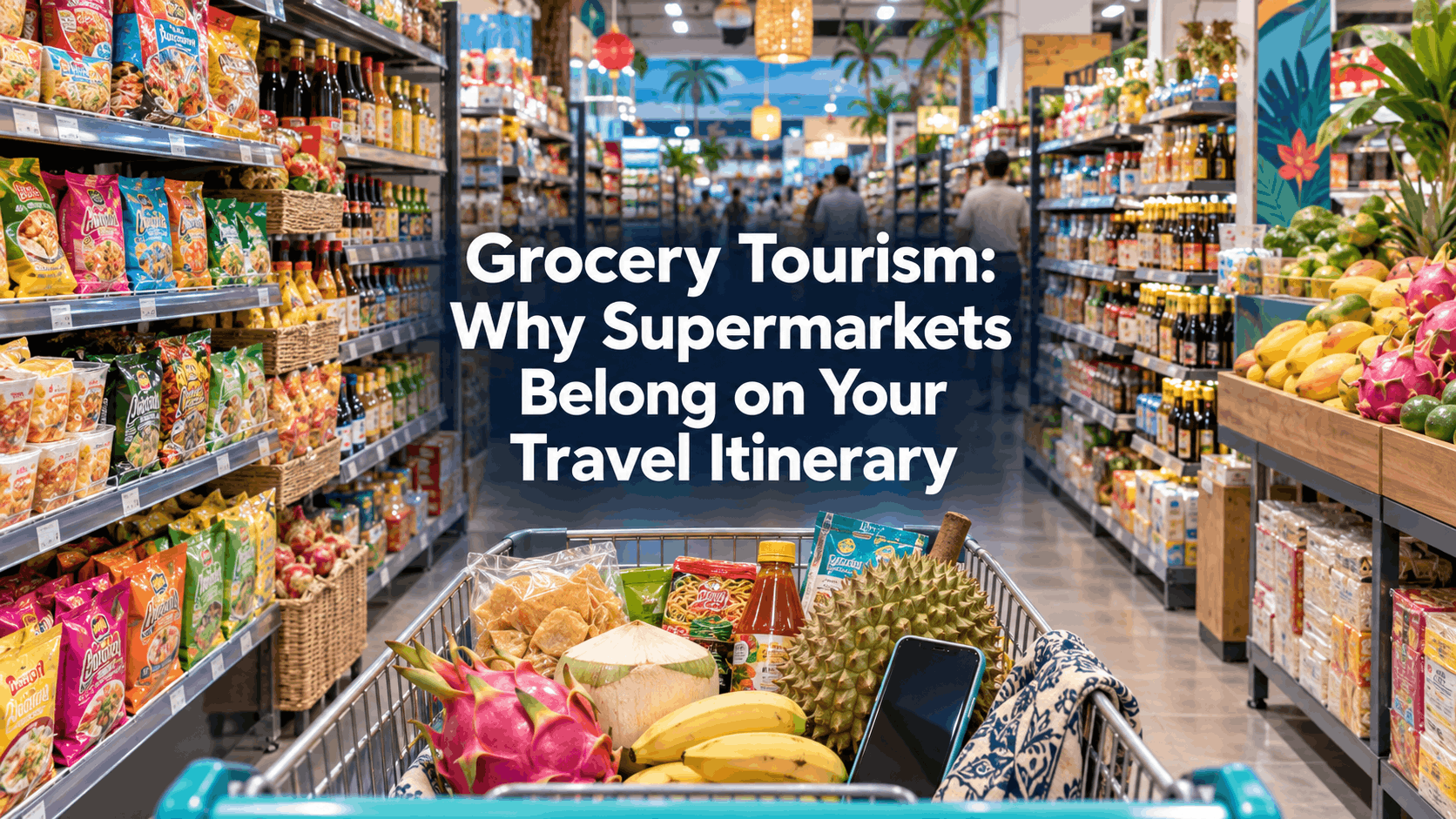
Grocery Tourism: Why Supermarkets Belong on Your Travel Itinerary
What Everyday Shopping Can Teach You About a Country, Its Culture and Its People
When most people plan an overseas trip, they create a list of the places they want to visit. Famous landmarks, historic buildings, beaches, museums and restaurants usually appear somewhere on the itinerary.
A supermarket rarely does. Yet grocery shops can be among the most interesting places we visit while travelling. They offer a glimpse into ordinary life that we will never find at a major tourist attraction. The shelves reveal what local people eat, what they consider affordable and which products form part of their everyday routines. They can also be surprisingly entertaining.
I have to be completely honest: I hate grocery shopping.
I do not want to browse, compare seventeen different brands or wander around looking for inspiration. I want to go in, get what we need and leave. If the list contains five things, I see no reason why the entire exercise should take longer than ten minutes.
My husband David, however, thinks a supermarket is a tourist attraction. It does not matter whether we are staying somewhere for three days or three months. The moment he discovers a supermarket he has not visited before, his eyes light up and I know we have lost the rest of the afternoon.
A quick trip for milk and bread can take more than an hour. David must examine every aisle, including the ones containing things we do not use and have absolutely no intention of buying. He does not simply select a jar from the shelf. First, he studies every available brand. Then every size. Then he takes out his phone and translates the ingredients. By the time he has finished investigating one jar, I have lost the will to cook whatever we needed it for.
Sometimes he will hold up something completely unfamiliar and say, “This looks interesting. What is it? I ask. I don’t know, but we should try it.
This explains why we regularly return home with products neither of us can identify. Sometimes opening the packet helps. Sometimes tasting it helps. Occasionally, we are none the wiser and quietly place it in the refrigerator, where it remains until one of us decides it has been there long enough to throw away without guilt.
I have now learnt to send David grocery shopping by himself. It is better for our marriage. Recently, a friend came to stay with us and David offered to take her to a new supermarket. I warned her that this was not going to be a quick shopping trip. “You’ll be gone for hours, she laughed. They only had about five things on the list. She clearly thought I was exaggerating.
Three hours later, they returned carrying bags filled with all sorts of fascinating purchases. Not one of the five things on the list was among them. My friend looked exhausted. You were right, she admitted. I now understand why you wouldn’t come. I resisted saying, I told you so. Well, almost.
She had learnt an important lesson: never go grocery shopping with David unless you have eaten first, have no other plans for the day and are genuinely interested in comparing every available bottle of soy sauce some things you simply have to experience for yourself.
I used to think this was simply one of David’s travel habits. It turns out that he is part of a growing trend known as Grocery Tourism.
What Is Grocery Tourism?
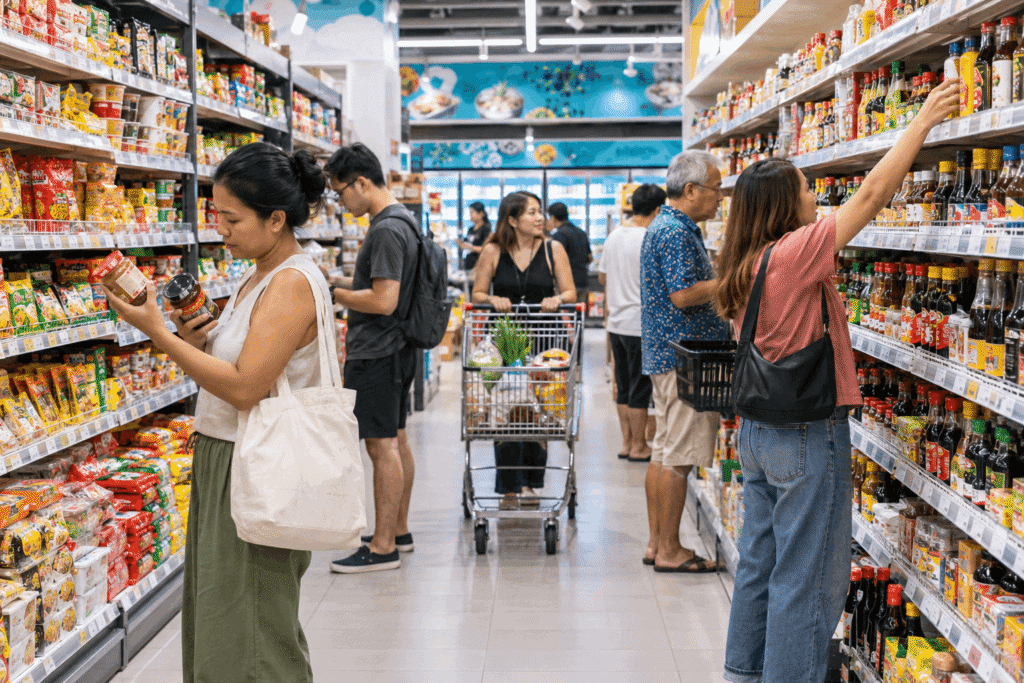
Grocery tourism is the simple pleasure of exploring supermarkets, fresh-food markets, convenience stores and neighbourhood shops while travelling.
It does not require a guide, an entrance ticket or a carefully planned itinerary. You simply walk through the doors, collect a basket and begin looking.
For some travellers, the attraction is finding unusual snacks or flavours that are unavailable at home. Others enjoy comparing prices, discovering regional ingredients or examining the local versions of familiar products. Many are simply curious about what ordinary people place in their shopping baskets.
Social media has helped turn grocery shopping into a recognised travel experience. Videos showing Japanese convenience stores, enormous American supermarkets, European food halls and Asian night markets attract millions of viewers. People are fascinated by the differences between what they know and what people elsewhere consider completely normal.
But grocery tourism is more than collecting unusual snacks or photographing colourful packaging. A grocery shop can tell us an enormous amount about a country. The size of the packets can suggest whether people shop daily or purchase supplies for several weeks. The refrigerated section may reveal how important dairy products are to the local diet. Entire aisles devoted to noodles, rice, sauces, spices or dried seafood show which ingredients are essential to everyday cooking.
Even the things you cannot easily find tell a story. A product considered essential in Australia may occupy one tiny shelf overseas or disappear completely.
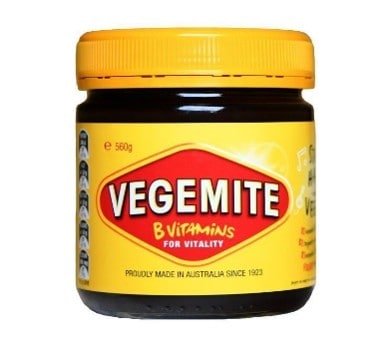
Take Vegemite.
I have a friend in Da Nang who runs a little side hustle sourcing Vegemite and selling it to desperate Australian expats. He is basically Da Nang’s Vegemite dealer.
I imagine the transactions taking place quietly in a café.
Have you got the stuff? “Yes. Original recipe. Unopened jar.
“How much? Twelve dollars.
There is a brief silence while the customer considers just how badly they need black yeast paste on their toast. The answer, apparently, is very badly.
These people willingly pay around $12 for a jar that costs about $3 in Australia. For that price, I would expect someone to spread it on the toast for me and then eat it so I didn’t have to. I have never understood Australia’s devotion to Vegemite. We convince unsuspecting overseas visitors to spread it thickly on bread, watch their faces collapse and then laugh as though they are the problem.
I can live overseas perfectly happily without it. There are many things I miss about Australia, but a small jar of salty brown sludge is not one of them. Yes, you may call me un-Australian.
My friend, however, has recognised a brilliant business opportunity. Forget importing luxury goods. In Da Nang, the real black market is black, comes in a yellow-labelled jar and leaves Australian expats prepared to pay four times the usual price for breakfast.
The experience reminds us that our version of normal is only normal because it is what we know.
A Window into Everyday Life
Tourist attractions show us the history, beauty and carefully presented image of a destination. Grocery shops show us something different: the cost and routine of everyday life.
Prices also provide a more realistic understanding of a destination than the menu at a tourist restaurant. The cost of rice, fruit, coffee, toiletries and cleaning products reveals far more about daily living expenses than the price of a cocktail beside the beach.
For travellers staying several weeks or months, grocery shopping quickly becomes part of establishing a routine. Finding somewhere to buy drinking water, breakfast supplies and basic household items can make an unfamiliar neighbourhood begin to feel manageable.
At first, every shelf requires concentration. Labels need translating, brands are unfamiliar and even something as simple as buying milk can involve several incorrect guesses.
Then, slowly, you begin to recognise things. You know where to find the coffee. You discover which yoghurt you like. You stop confusing drinking yoghurt with ordinary milk. The person at the checkout begins to recognise you, and the shop that once felt completely foreign becomes part of your everyday life.
Shop with Curiosity and Try Not to Cause an International Incident
Grocery shopping overseas is meant to be enjoyable, but it helps to stop and watch what everyone else is doing before charging in with a trolley.
In Australia, we happily pick up fruit, squeeze it, inspect it from every angle and return it to the pile because it failed some private test known only to us. In other countries, handling fresh produce may not be acceptable. There may be gloves, tongs or a very serious-looking person whose job is to choose it for you. Watch the locals first. It is much easier than being publicly told off while still holding the offending mango.
The weighing system can also be a mystery. Sometimes you weigh and label the produce yourself. Sometimes an employee does it, and sometimes you arrive at the checkout only to discover that you have missed an important step somewhere near the bananas. Nothing identifies you as a confused tourist faster than holding up an entire queue while your unlabeled tomatoes are sent back for processing.
Payment can bring its own surprises. Carry small notes and check which payment methods are accepted before filling your basket. The sign at the counter may show twelve different payment apps, none of which you can use because they require a local bank account. Your large banknote will then be greeted with no enthusiasm.
Something I have learnt in Vietnam, particularly in markets and small local shops, is that once you have selected an item and agreed on the price, that is the price. You do not change that.
I recently bought some fruit from a small local market. The total came to 19,000 dong, so I handed the woman a 20,000-dong note and told her to keep the change.
I thought I was making life easier. Instead, I started a small emergency. There was calling out, rapid conversation and people running around looking for change. I repeated that I did not need the 1,000 dong, but that was completely beside the point. We had agreed on 19,000 dong, not 20,000, and she was not going to accept more than the correct price.
Eventually, someone located the missing 1,000-dong note, and it was placed firmly into my hand. Order was restored, the accounts were balanced and everyone could return to their day. The change was worth only a few Australian cents, but to her it was not about the amount. It was about completing the transaction honestly and correctly.
I walked away with my fruit, my 1,000 dong and another reminder that what seems like a harmless gesture in one country may create complete confusion in another.
A translation app is extremely helpful when checking ingredients, particularly if you have allergies. It can also prevent you from arriving home with fish sauce when you thought you had bought cooking oil. The labels may look beautiful, but attractive packaging is not a legally binding promise that you will enjoy what is inside.
Be thoughtful when taking photographs as well. Colourful markets and unusual displays may be fascinating to visitors, but the people working there are not part of the scenery. Ask before photographing anyone. A smile and a gesture towards your phone will usually get the message across in any language.
Finally, try the local alternatives instead of spending the entire visit searching for Western brands. You did not travel thousands of kilometres to become distressed because the supermarket does not stock your preferred breakfast cereal. Choose something made locally and give it a chance. You may discover a new favourite or something that sits unopened in the cupboard until the day you move out. Either way, you will have a story.
I Still Hate Grocery Shopping
After all this, I would love to say that David has converted me into an enthusiastic grocery tourist. He has not.
I still want to enter the shop, buy what we need and leave before anyone has time to rearrange the shelves. David still wants to inspect every aisle, translate every label and seriously consider buying products neither of us can identify. The difference is that I now understand why he enjoys it.
While I see a building full of groceries, David sees a country waiting to be discovered one jar, packet and mysterious refrigerated item at a time. He notices things I would walk straight past, and occasionally he brings home something we genuinely enjoy.
More often, he brings home something that sits in the cupboard while we both wait for the other person to try it first. So, I have found the perfect compromise.
David explores the supermarket, and I find a nearby café. Several hours later, he arrives carrying bags of things we never knew we needed and begins telling me everything he has discovered.
I listen patiently before asking the only question that really matters. Did you remember fresh milk? Usually, he has not.
Love MyLifestyle
Read my personal journal stories here.
About the Author:
Sheridan-Leigh is the passionate voice behind the MyLifestyle Blog, where life is celebrated with vibrant stories and insightful travel tips. With a deep love for slow travel, she believes in truly experiencing each destination, creating connections beyond the surface. Her blog is a blend of personal stories, expert advice, and a philosophy that life is for living to the fullest and is rich with opportunities for growth and adventure. Join Sheridan-Leigh as she shares her journey, inspiring others to embrace life, travel deeply, and live fully.
See her recent travels: Click on the image. https://mylifestyle.travelmap.net